

UPDATED as of 10 A.M. on March 30, 2026
Uncertainty surrounding TSA funding continues to ripple across the travel industry. While a recent executive order has provided short-term relief for TSA workers, a longer-term legislative solution remains stalled.
On March 27, President Donald Trump signed an executive order aimed at ensuring TSA officers receive immediate pay after missing consecutive paychecks. The move was designed to address mounting operational challenges, including staffing shortages that reportedly reached as high as 40 percent in some locations.
According to the Department of Homeland Security, employees were expected to begin receiving pay as early as today, March 30. However, questions remain about the legality of reallocating funds without formal congressional approval.
Despite this temporary measure, the broader funding dispute between lawmakers remains unresolved. For the travel sector, the impact has already been significant.
More than 480 TSA officers have reportedly resigned during the shutdown, contributing to extended security wait times at major airports. While the executive order may help stabilize staffing in the near term, uncertainty around long-term funding persists.
UPDATED as of 4 P.M. on March 27, 2026
As of March 27, a partial DHS shutdown has stretched into its sixth week, leaving TSA agents working without pay. The latest development centers on a Senate-passed funding package that would allocate resources to key agencies, including TSA, the Coast Guard and FEMA.
However, the House has rejected the measure, citing concerns over the exclusion of funding for border enforcement agencies such as Immigration and Customs Enforcement (ICE) and the Border Patrol.
House leadership has instead proposed a short-term, 60-day continuing resolution to fund the entire DHS, though that proposal is expected to face resistance in the Senate.
In response to mounting concerns, President Donald Trump announced an emergency measure to ensure TSA agents receive pay despite the ongoing congressional deadlock. While the move is expected to stabilize staffing in the near term, it does not resolve broader funding gaps affecting other DHS agencies.
ORIGINAL STORY
The Senate approved a funding measure early Friday to cover TSA agents and most other Homeland Security functions.
But it excludes the immigration enforcement operations at the center of the ongoing budget standoff that has disrupted airports, strained travel and caused financial hardship for workers.
The agreement passed unanimously without a recorded vote and now moves to the House, where lawmakers are expected to take it up later Friday. Senate leadership indicated the measure would reopen large parts of the government, while acknowledging additional work remains to fully resolve the broader funding dispute.
The breakthrough came as pressure intensified to end the 42-day impasse over Department of Homeland Security funding, with TSA workers facing the prospect of missing another paycheck. At the same time, President Trump signaled he would act to ensure TSA agents are paid promptly, citing the need to stabilize airport operations.
The deal does not include the constraints Democrats had sought on the administration’s immigration enforcement agenda.
Senate Democratic leadership argued the resolution could have been achieved sooner and emphasized that efforts will continue to push for reforms to immigration enforcement before additional funding is approved.
What’s Included, and What Isn’t
Lawmakers worked through the night to finalize a package that funds much of the Department of Homeland Security, including the Federal Emergency Management Agency, the Coast Guard and TSA. However, it leaves out funding for Immigration and Customs Enforcement, while Customs operations are funded and Border Protection is not.
The agreement also does not impose new limits on immigration enforcement, which has largely continued despite the shutdown. Previous legislation signed by Trump had already directed significant funding toward DHS, including tens of billions for ICE, allowing those operations to continue.
The measure now heads to the House, where its path forward remains uncertain. Speaker Mike Johnson faces a narrow majority, and passage is expected to require bipartisan support amid resistance from both progressive and conservative factions.
Some conservative Republicans have criticized the proposal for failing to fully fund immigration enforcement and are pushing to secure additional resources for ICE in the next budget package as part of a broader effort to advance the administration’s immigration priorities.
In the Meantime…
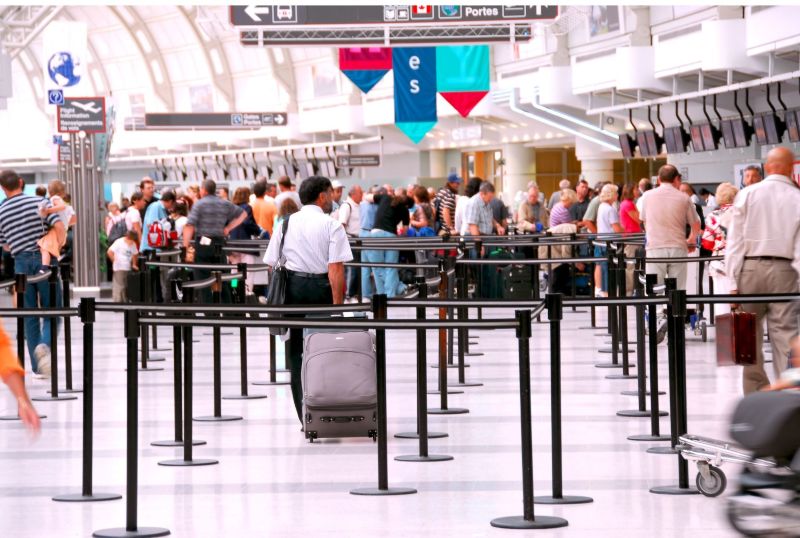
Airport lines are getting longer as TSA workers deal with financial stress during the shutdown.
Missed paychecks are leading to more absences, causing delays and even raising concerns about possible airport disruptions if staffing gets worse. At some airports, more than 40 percent of TSA workers have called out, and nearly 500 officers have quit since the shutdown began.
On Wednesday alone, more than 3,100 TSA employees—over 11 percent of those scheduled—didn’t show up for work, according to the Department of Homeland Security.
Everett Kelley, President of the American Federation of Government Employees, said the union is glad TSA workers will be paid, but stressed that Congress still needs to reach a broader deal to fund the Department of Homeland Security, pay all workers and keep essential services running.
You May Also Be Interested In…
Airport Chaos Grows: TSA Staffing Shortages and ICE Deployment
[UPDATE] Pilot and Copilot Killed in Collision at LaGuardia Airport
In the Air Today: Airline News