


By Robert Kraus, CEPS, CNS, MMP
Organizing a trade show, exposition, fair or bazaar can feel like a high-stakes gamble.
You spend months coordinating logistics, marketing to audiences and setting up spaces, only to find that hidden costs have swallowed your entire budget. When your organization’s mission relies on these funds, you cannot afford to just break even.

To ensure your next event is a high-profit engine rather than a financial drain, you must understand where the real money is made, optimize your marketing timeline, eliminate friction in your sales funnel, and avoid the venues designed to extract every penny of your hard-earned revenue.
Understanding the 3:1 Rule
A common mistake among inexperienced expo organizers is focusing too heavily on attendee ticket sales to cover costs. In reality, exhibitors are the undeniable lifeblood of the trade show model.
Historically, vendor-driven space monetization outpaces attendee ticket revenue by roughly a 3:1 margin. If you want to secure your event’s financial footing, your primary focus must be on maximizing vendor participation and sponsorship acquisition.
According to benchmark industry data from the Center for Exhibition Industry Research (CEIR), the standard revenue breakdown for a successful exhibition typically tracks as follows:
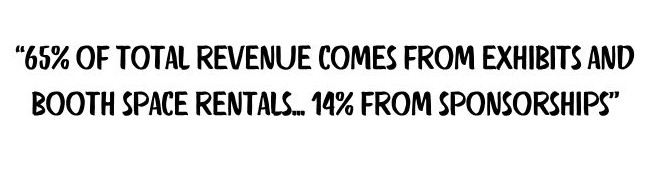
- Exhibits & Booth Space Rental (Vendors): 65% of total revenue.
- Attendee Registration & Ticket Sales: 21% of total revenue.
- Sponsorships & Advertising: 14% of total revenue (e.g., directory ads, digital branding, banner placements).
By prioritizing the 79% of your revenue that comes directly from businesses and sponsors (65% booth space + 14% sponsorships), you insulate your organization from the unpredictability of attendee turnout.
The 6-Month Timeline to Profitability
Executing a profitable event requires a structured, aggressive timeline. Spreading your promotional efforts across a clear 6-month lead time allows you to build momentum logically, securing your major revenue blocks first before driving public attendance.
Months 1–2: Vendor & Sponsor Acquisition
Because vendor-driven revenue is your most important financial asset, the first 60 days must be entirely dedicated to filling your floor plan.
- The Strategy: Offer a deep early-bird discount for the purchase of tables, booths, and high-level sponsorships to incentivize immediate cash flow.
- Outreach Tactics: Deploy a multi-channel campaign consisting of 3 to 5 separate emails targeted at your prior vendors, in-house lists, and vetted, purchased industry lists. Supplement these digital touchpoints with a direct mail postcard campaign and direct follow-up phone calls to high-value prospects.
- B2B Networking: Execute highly targeted B2B outreach on LinkedIn to connect with local business owners and corporate social responsibility (CSR) managers who align with your mission.
Months 3–4: Early-Bird Attendee Registrations
With a solid foundation of vendors secured, shift your focus toward building your audience.
- The Strategy: Launch attendee ticket sales with an early-bird discount to encourage advance purchases, giving you predictable attendance numbers well ahead of schedule.
- Outreach Tactics: Send dedicated event emails twice weekly to both your organic in-house lists and purchased contact databases.
- Organic Social Media: Post non-paid social media messaging at least twice a week across the five major outlets: Facebook, Instagram, TikTok, LinkedIn, and relevant Reddit Communities.
- Leveraging Stakeholders: Turn your internal network into ambassadors. Require your nonprofit board members and staff to re-post and share your event announcements at least once weekly. Similarly, encourage your booked speakers and presenters to share the event with their audiences at least once a week.
Months 5–6: The Final Push & Press Blitz
The final 60 days are about maximizing density, selling out remaining inventory and driving urgency.
- The Strategy: Shift from organic reach to paid, targeted social media advertising campaigns aimed at local demographics.
- Outreach Tactics: Increase the frequency of your emails and social media posts to at least three times a week.
- Public Relations: Actively contact local press, radio stations, and community bloggers to secure media coverage, calendar listings, and interviews regarding your event’s community impact.
- Continued Advocacy: Board members, staff, speakers, and presenters must maintain their momentum, continuing to share organizational updates and promotional posts at least once a week.
Ditch the Vendor Application Form
One of the most pervasive, revenue-killing mistakes event hosts make is forcing interested vendors or sponsors to fill out an online “application” before allowing them to pay.
Industry data indicates that organizations using an approval application process rather than a direct checkout experience see a 75% to 80% decrease in response rates. This means up to 4 out of 5 qualified prospects who are ready to buy a booth right now will abandon the process simply because they do not want to wade through unnecessary administrative friction.
The best approach is simple: Take the money first. To protect your organization’s branding and event standards while keeping the checkout frictionless, structure your purchase page with clear terms explaining that you retain the right to refuse service and issue a prompt refund.
Recommended Wording for Booth/Sponsorship Checkout & Receipts:
“Purchase Subject to Approval – To maintain a diverse and family-friendly environment, [Name of Organization Producing Event] reserves the right to limit the number of vendors in any single category and to reject any vendor whose products/services are deemed incompatible with the event’s mission. In the event of such a rejection, all fees paid will be refunded in full. The Organizer’s decision is final.”

Escaping the “Trash Fee Trap”
Even if you execute your marketing timeline perfectly and sell out your floor, you can still lose your shirt if you host your event in a traditional venue. Conventional convention centers and high-end hotels routinely lure non-profits in with a reasonable base rental price, only to bleed their budgets dry through hidden, mandatory “ancillary services,” or what are known as “trash fees.”
These predatory add-ons—which include “material handling” charges, utility “drop fees,” and exorbitant food and beverage minimums—can easily add 50% to over 100% to your base rental price. Because traditional spaces lock you into exclusive in-house providers, you have zero leverage to negotiate.
Shifting to Non-Traditional Venues
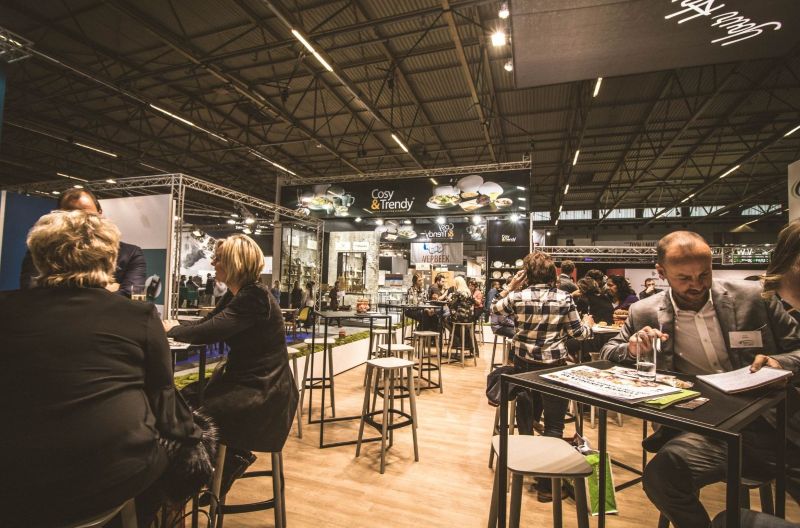 To protect your bottom line, consider abandoning traditional convention spaces and high-end hotels altogether. Shifting your event to creative, non-traditional venues—such as VFW halls, community centers, Elks Lodges, Knights of Columbus halls, school gyms, large office lobbies, or “white box” warehouses – can instantly slash your overhead by 40% to 60%.
According to event optimization frameworks pioneered by industry specialists, breaking away to these spaces grants you immediate operational freedom:
- Venue Rental Savings: Save up to 40% on the venue rental alone by choosing community-focused spaces.
- A/V Costs: Save up to 60% by bypassing exclusive in-house production teams and hiring independent tech crews.
- Food & Beverage: Save up to 50% by avoiding mandatory in-house catering. Instead, leverage the indoor-outdoor flow of non-traditional spaces to bring in local food trucks or independent caterers.
- Logistical Ease: Most non-traditional spaces feature free or low-cost parking lots, eliminating a major logistical friction point for both your exhibitors and your attendees.
By dropping the booth fee to an accessible $350, you naturally attract a wider volume of vendors. A larger, more diverse collection of exhibitors creates a more vibrant, high-energy environment, which naturally drives higher consumer attendee registration. Because the footprint of your show expands, you can comfortably command higher ticket prices, resulting in a secondary revenue spike.
Best of all, these modular “pop-up” style layouts are highly scalable. If your indoor booth spaces sell out completely, you can seamlessly expand your footprint into adjacent lawns or parking lots using outdoor tent structures. You never have to turn away a paying vendor, your sponsors receive maximum brand exposure from a larger audience, and your nonprofit walks away with thousands of dollars in pure profit to directly fund its mission.