
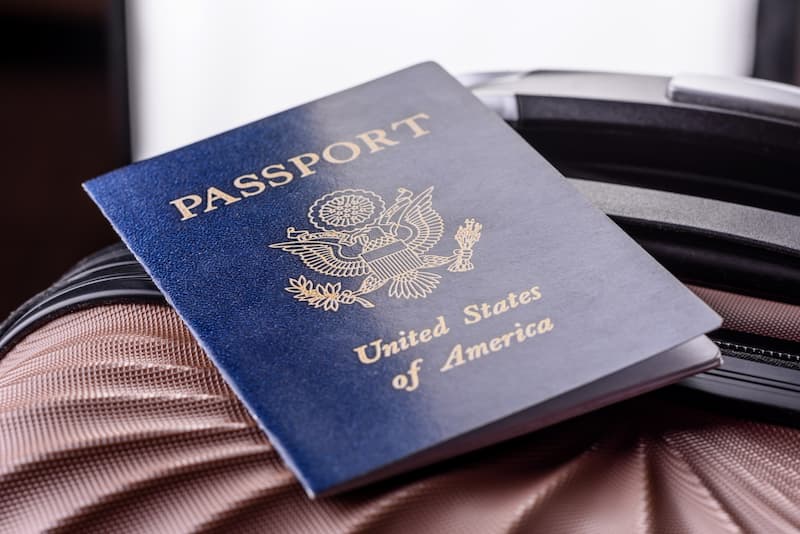
The latest Henley Passport Index has revealed a shift in how we move around the globe, with the United States passport experiencing a continued downward trend. The U.S. now sits in 10th place, tied with Iceland and Lithuania, offering access to 182 destinations—four fewer than last year.
The index, which evaluates passport strength based on visa-free access to destinations worldwide, shows Asian nations dominating the top spots. Singapore leads with visa-free entry to 193 countries, while Japan and South Korea share second place with 190.
Europe remains a strong contender, with seven EU nations—Denmark, Finland, France, Germany, Ireland, Italy and Spain—allowing entry to 189 destinations without prior paperwork.
Passport Strength Reflects Shifts in Global Power Dynamics
The reasons behind the decline of the U.S. passport are complicated, involving geopolitical changes, evolving diplomatic relationships and shifts in global power dynamics.
“Americans are now leading the demand worldwide for alternative residence and citizenship options, with British nationals also among the top five globally,” said Dr. Juerg Steffen, Chief Executive Officer at Henley & Partners, in a press statement. “As the U.S. and UK adopt increasingly inward-looking policies, we’re witnessing a marked rise in interest from their citizens seeking greater global access and security.
“Your passport is no longer just a travel document—it’s a reflection of your country’s diplomatic influence and international relationships. In an era of growing inequality and mounting geopolitical uncertainty, strategic mobility and citizenship planning are more critical than ever,” added Dr. Steffen.
While the U.S. position continues to slip, other nations are climbing the ranks. The United Arab Emirates has jumped 34 places over the past decade to 8th place. China has also grown, climbing 34 spots since 2015, although it still doesn’t have visa-free access to Europe’s Schengen Area.
The introduction of new policies, such as the new “visa integrity fee” for incoming international visitors to the U.S., has drawn criticism from industry groups like the U.S. Travel Association. They argue that such measures could further isolate the country and discourage inbound travel, potentially impacting reciprocal agreements and further weakening the U.S. passport’s global standing.
You May Also Be Interested In…
TSA Ends ‘Shoes-Off’ Policy in Major Airport Security Shift
New Airline Rankings May Surprise You
U.S. Policy Driving Companies to Rethink International Business Travel