
Prevue caught up with Adam Burke, President & CEO, LA Tourism, during IMEX for an interview on what’s new and upcoming at the destination for planners and their clients.
“I would divide it into four key touchpoints and one of them is huge investments into infrastructure improvements,” says Burke. “And that may not be as sexy as some of the other things, but it’s incredibly important. The second thing is the tremendous investment in new attractions coming online, and not just this year but virtually every year and for the next several years. The third is this unprecedented run up of major global sporting events, which has really shone a spotlight on Los Angeles in a positive way. And the fourth is the community, and how we function as a community in welcoming planners and attendees.”
On the infrastructure front, ongoing improvements to LAX throughout the airport include upgraded terminals, enhanced pedestrian connections and expanded passenger amenities. The latest expansion of the Tom Bradley International Terminal has added approximately 150,000 sf and eight additional gates, increasing capacity and improving operational efficiency for travelers. Terminals 2 and 3 are now operating as a unified 27-gate complex, while Terminal 5 is currently undergoing a complete redevelopment and is expected to reopen in 2028.
Direct rail access to LAX is now available via the LAX Metro Transit Center station that opened in June this year, and once Skylink is open in February 2027, it will provide the final connection between the Metro station and airport terminals. Skylink will be a 2.25-mile elevated electric train with six stations and will connect the airport terminals with the Metro station, rental car facility, economy parking and ground transportation center. The system is designed to operate 24/7 and will be free to passengers. The Metro system itself has also expanded with the D Line Section 1 having opened in May 2026, extending the subway service west to Beverly Hills through three new stations at Wilshire/La Brea, Wilshire/Fairfax and Wilshire/La Cienega. Sections 2 and 3, continuing toward Century City and Westwood, are currently under construction.
“They’re really focused on safety and security and the rider experience,” says Burke. “Let’s say you’re downtown and you’re using the convention center, but you want to do a back lot takeover at Universal Studios or Warner Brothers. You can actually use LA Metro to get your group there. So that investment has been transformational and then certainly from a planner perspective, another big piece is the investment in the Los Angeles Convention Center.”
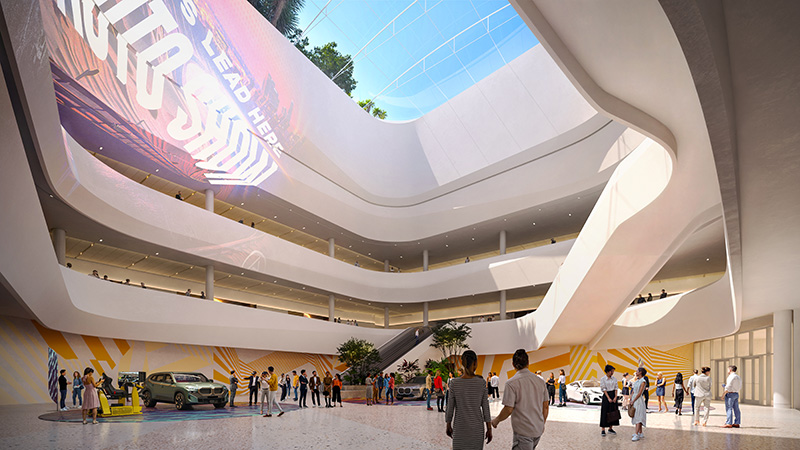
The Los Angeles Convention Center’s Expansion and Modernization Project is currently on track for completion by Spring 2029 and will create 750,000 sf of contiguous exhibit space by connecting its existing South Hall and West Hall with a new 193,000 sf exhibit area. The expansion will also add a new 98,000 sf column-free ballroom that can be divided by air walls into 11 smaller meeting rooms to accommodate events from 12 or up to 9,700 attendees. The ballroom will feature a rooftop terrace with views over Downtown Los Angeles that can be used as pre-function space as well as separately for private events. Additionally, the expansion will add Skynode, a futuristic new atrium that can be used as event space and features abundant sunlight as well as access to state-of-the-art digital production facilities.
“I will be honest in telling you this has always been historically LA’s Achilles’ heel,” says Burke. “We have a phenomenal meetings product, but we were limited because we couldn’t take any event that required more than 350,000 sf of contiguous meeting space. The number that really contextualizes it is that 90 percent of the top 250 citywide conventions in the nation only convene in 20 destinations, and it’s because they are too large for any of the other ones. Prior to the expansion, we had the 23rd ranked center in the country because of the limited contiguous space. The expansion is now well underway, and it will give us over 750,000 sf of contiguous meeting space.
“Immediately it moves us to be the sixth largest center in the nation based on contiguous function space, and the ballroom will be the fourth largest convention ballroom in the nation. Since the expansion was announced one year ago, we’ve now secured 18 new pieces of business that are specifically attributable to the expansion with over $405 million of economic output. So it’s such a game changer for our community.”
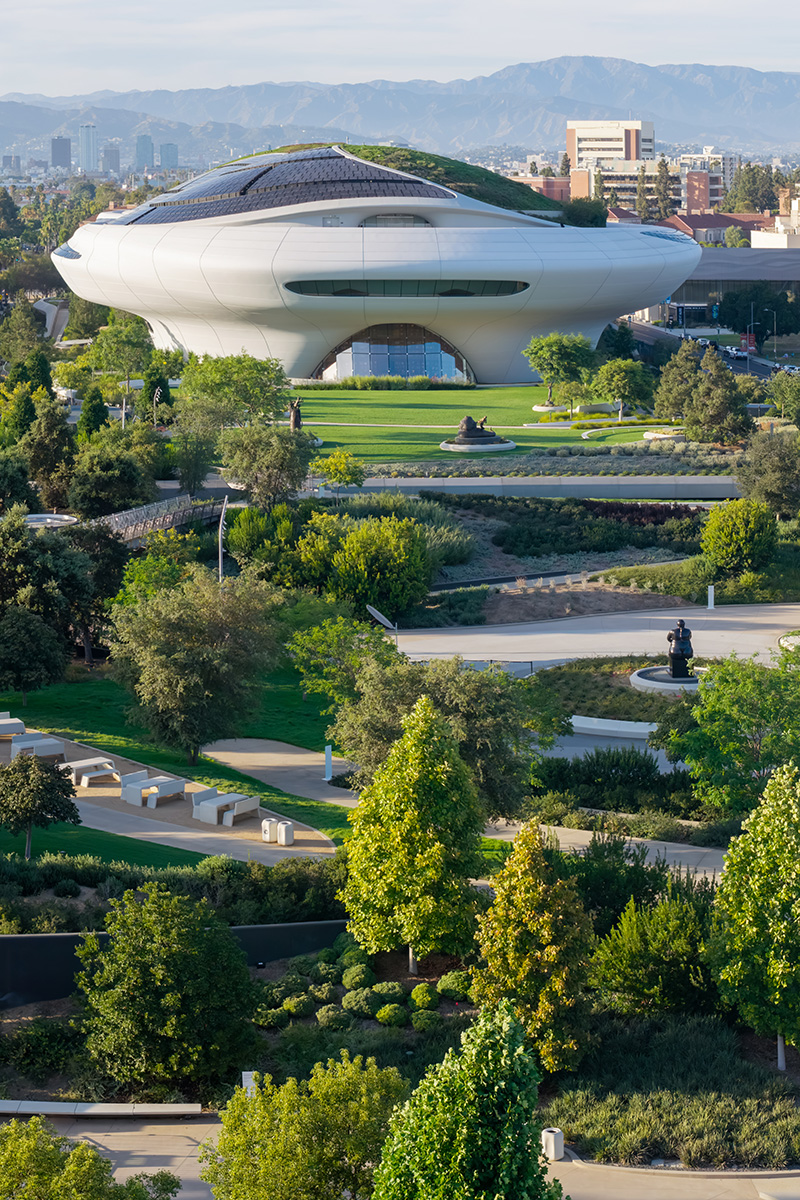
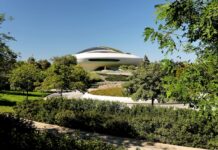
The Lucas Museum of Narrative Art in Los Angeles opened in September this year as a first-of-its-kind institution dedicated to showcasing the universal tradition of storytelling through images. Founded by George Lucas and Mellody Hobson, the museum traces visual storytelling across cultures and through time — from prehistoric cave paintings to illustration, comics, cinema and murals—exploring how visual stories connect us. Located within a soaring 300,000-sf building, the museum houses more than 100,000 sf of artworks, continuous film screenings, a free research library and the destination restaurant Skywalker Grill. The museum presents contemporary vehicles of storytelling such as illustration, comics and cinema alongside more traditional media such as painting, sculpture and photography. Artists as diverse as Frida Kahlo, Norman Rockwell, Frank Frazetta and Robert Crumb are featured in the collection, alongside film materials that include the complete Lucas Archives (1971–2012).
“From a planner perspective, they have designed the Lucas Museum to be purpose built for event planners, says Burke. “If you see the aerial views, you will see a beautiful green belt over the top of the building that looks like the forests of Endor. That’s actually not open to the public because it’s a private event deck. They’ve quite intentionally built in incredible flexible meeting space, including that top green belt.”
The museum is situated on a 13-acre campus that includes an expansive green space with an amphitheater. Event spaces include the Plaza with standing capacity for up to 1,000 attendees and ideal for large-scale outdoor gatherings. The museum’s 10,000-sf Main Lobby has standing capacity for up to 600, as does its 10,000-sf fifth floor event space. Several theaters can seat 299 people, while the 2,000-sf Education Lobby has standing capacity for 60 attendees. Skywalker Grill offers a private dining room for up to 40 guests or can seat up to 220 for a full buyout.
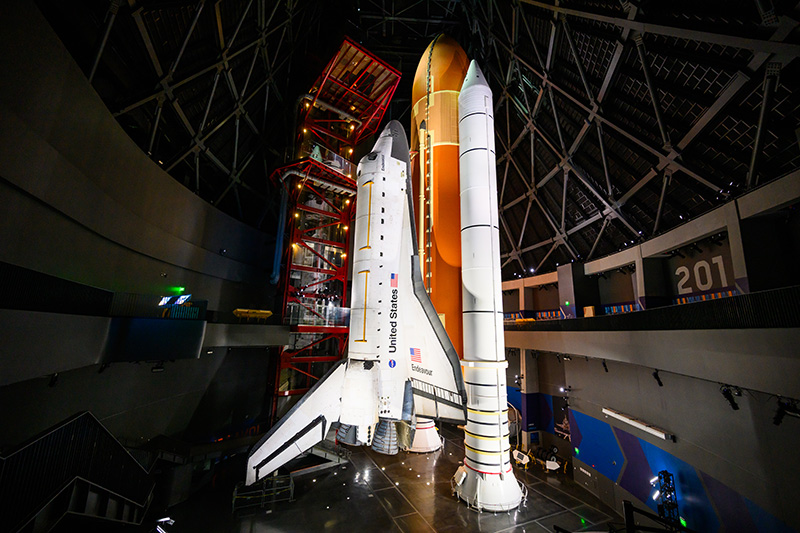
Other recent attractions to open in LA include the David Geffen Galleries at Los Angeles County Museum of Art, which opened in April 2026 adding 110,000 sf of gallery space. The Samuel Oschin Air and Space Center also just opened in November 2026 as a 200,000-sf expansion of the California Science Center in Exposition Park, nearly doubling the museum’s existing exhibit space. The Center is now the permanent home of Space Shuttle Endeavour, displayed in a full 20-story launch configuration with its authentic external tank and solid rocket boosters. The center also features 100 artifacts and 100 interactive exhibits.
“My biggest mantra for professional meetings and events is ‘no surprises’. I want to know if I go to a destination that they are well equipped to handle my event and my specific needs,” says Burke. “We just have come off of not just successfully hosting eight World Cup matches at SoFi Stadium, but we started the year with the NBA All-Star Game at Intuit Dome. We rolled right into the U.S. Women’s Open at Riviera Country Club. Next year we’ll host a Super Bowl for the second time in five years. And then when we host the Olympic and Paralympic Games, it will make Los Angeles the first American city to have ever hosted the games three times. The only other two to do it were London and Paris. So the reason I say that is I think it can give planners tremendous confidence that if you’ve got groups like the IOC and FIFA and the NBA and the NFL, they can go anywhere, so consistently choosing LA every year is because they know we can deliver at scale.”
“And then the last piece is just community. I think it’s particularly important for planners who are bringing a really diverse global group to a community, you want to know that your attendees are going to be welcomed and really embraced by the community. One of the things I love about LA is it is one of the most diverse and inclusive communities I’ve ever lived in. Angelenos come from 140 different countries. There are over 120 different languages spoken and some of the largest diaspora outside of their home countries. So particularly in today’s climate, the thing we keep hearing from planners is they love coming to LA because they know that everyone will feel at home and feel embraced by the community, and that’s really important in terms of creating a sense of welcome and psychological safety.”
For more information, visit discoverlosangeles.com.
You May Also Be Interested In…
Lucas Museum Brings Art and Event Spaces to Los Angeles
LA Convention Center Gets Go-Ahead for Expansion