
By Jamie Bruce, President, Teneo Hospitality Group
Corporate and incentive planners are giving cruise ships a much closer look these days, and for good reason.
Between the cost predictability of an all-inclusive structure and the ability to move a group through multiple destinations without changing addresses, ships have earned a real seat at the table alongside hotels, destination resorts, and all-inclusive resorts as venue options.
At Teneo Hospitality Group, we put the entire global cruise industry, ocean and river alike, at our fingertips for corporate, meetings and incentive programs through our partnership with 3D Cruise Partners.
We’ve partnered with clients on everything from sales incentive programs spanning more than 1,000 cabins to intimate hosted meetings for 40 attendees, and time after time, we’ve seen that the value of meeting on the water isn’t defined by the size of the group.
Here’s what planners considering their first program at sea should know.
Full and Partial Buyouts Are More Attainable Than Planners Assume
Many planners assume a ship buyout is reserved for the largest incentive budgets. In practice, it’s far more accessible than that. We’ve guided leadership summits into full buyouts where the ship itself became the venue, and river vessels make the math even more approachable: their smaller cabin counts put an exclusive buyout within reach for a mid-size group.
When a program is too large for a single vessel, the good news is that ship size doesn’t have to be the limiting factor. Groups can be spread across multiple ships sailing the same itinerary, which keeps the program intact rather than compromising on the experience.
A Simpler Way to Contract
One of the most appealing parts of a cruise program is how consolidated it is. Meeting space, guest rooms, F&B and shore excursions often remain under one contract and one point of contact, for a program that can move through three or four destinations without anyone repacking a suitcase. That predictability is especially useful when building a budget a year out, and it gets even easier with a partner who has buying power across the cruise landscape.
Luxury lines are leaning further into this, too, bundling off-ship excursions and dining into an all-inclusive-style package much the way many land-based, all-inclusive resorts do, giving planners a comparably premium experience with fewer moving pieces to negotiate separately.
Built-In Togetherness
A ship naturally keeps a group together in a way that’s hard to replicate anywhere else. Everyone is at the same pool deck, the same dining room, the same sea-day activity, which creates more organic opportunities for networking and connection throughout the entire program. It’s one of the clearest engagement advantages a floating venue offers.
A ship can also be branded top to bottom, ocean, river or expedition, as a floating extension of the company, hitting several ports of call within a single program. For companies considering an international, multi-city itinerary, that’s an appealing way to give attendees several destinations without the logistics of separate hotel stays and flights between them.
Plan Around the Ship’s Schedule
Every new-to-cruise planner should build in extra time for embarkation and debarkation, the two windows that can take longer than expected if a large group is moving through security and check-in on the ship’s timeline. Connectivity, once the top concern, is far less of an issue now that most ships run on high-speed satellite systems like Starlink; we still recommend testing the ship’s setup in advance, especially for any general session using live polling or heavy video.
The overall mindset shift is straightforward: a program at sea is built around the ship’s schedule for embarkation, port calls and dining, and once that’s factored in early, everything else falls into place.
Sea Days Do the Heavy Lifting
The best cruise agendas work with the itinerary instead of around it. Sea days, when there’s no port call pulling people off the ship, are the natural home for general sessions and breakouts, since attendees are a focused audience with nowhere else to be. Port days flip the agenda toward experience: excursions, team-building, free time. Evenings are built around dining and networking, which happens organically because everyone is walking the same decks.
Consider a working session in the morning while the ship is still moving, then an afternoon that opens into a private cooking class with the chef as the coastline drifts by, or sunset yoga on deck while anchored in port.
What to Look for When Selecting a Ship
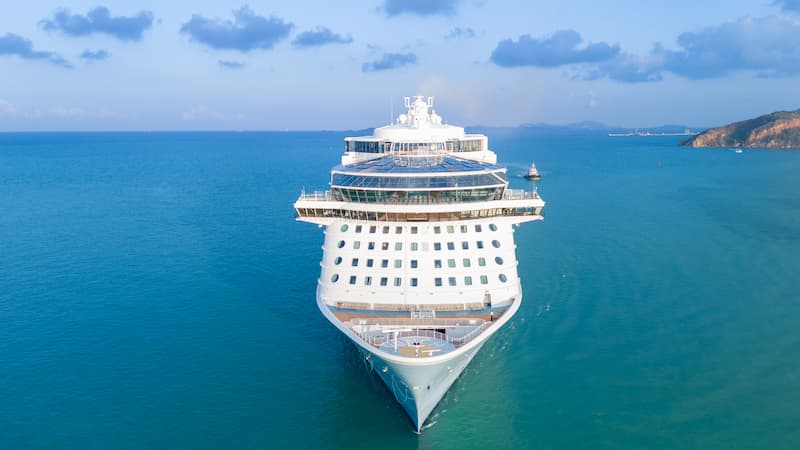
Ship size relative to group size is the first filter. A 100-person group can disappear on a mega-ship or command an entire river vessel, and those are two very different programs. From there, its destination fits to the objective: a leadership retreat may want a smaller, more intimate itinerary with fewer, richer port days, while an incentive trip often wants the bucket-list ports. Meeting facilities and AV capability are worth vetting early, since not every ship is built for a general session with a full stage and screens.
Bring In a Specialist
For organizations considering their first meeting or incentive event at sea, the best advice is simple: partner with someone who already knows the category. A dedicated cruise and meetings partner knows which vessels have the meeting infrastructure, which itineraries fit the group size, and how to negotiate group rates. Working through a global partner with relationships across the cruise lines takes that weight off the planner.
Hotels, resorts and all-inclusives remain the backbone of great meetings and incentive travel. Still, cruises are giving planners one more strong option in the mix: a fully branded, all-inclusive venue that happens to move between destinations.
You May Also Be Interested In…
Cruising Into Meetings & Incentives
Why Event Production Is Becoming the New Strategic Driver in Planning
Exclusive: How Global Events Drive Cross-Border Progress