
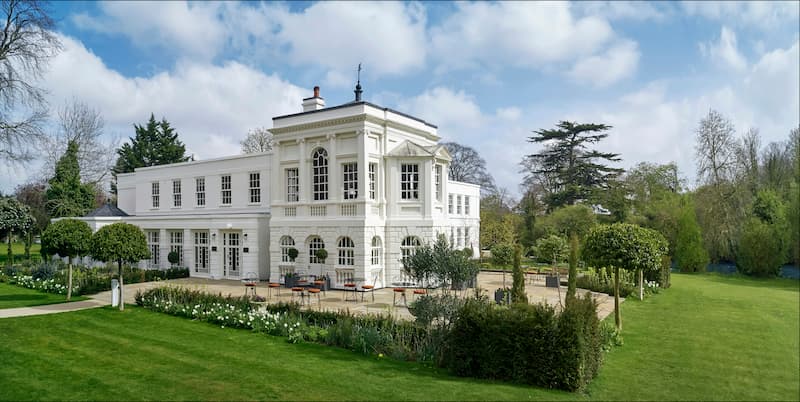
Monkey Island Estate, an exquisite countryside retreat on the River Thames, caters to top-tier groups.
Stepping across the footbridge leading to Monkey Island Estate feels like stepping back in time to storied British history. Indeed, the small island that is home to the exquisite YTL Hotels resort was originally inhabited by monks around 800 years ago. Over the centuries, it became a secluded upper-echelon retreat for royalty, aristocrats, writers and performers, including the composer Edward Elgar, who wrote his First Symphony Violin Concerto here.
The resort’s two meticulously renovated original structures, the Temple and Pavilion buildings, were constructed in the late 1730s by Charles Spencer, 3rd Duke of Marlborough. Add to this rich historical tapestry that Monkey Island is only 20 minutes from Heathrow Airport, one hour from London, minutes away from attractions such as Windsor Castle, and a stone’s throw from the charming village of Bray with two three-Michelin-star restaurants, and you have an exceptional destination for top-tier meetings and events.
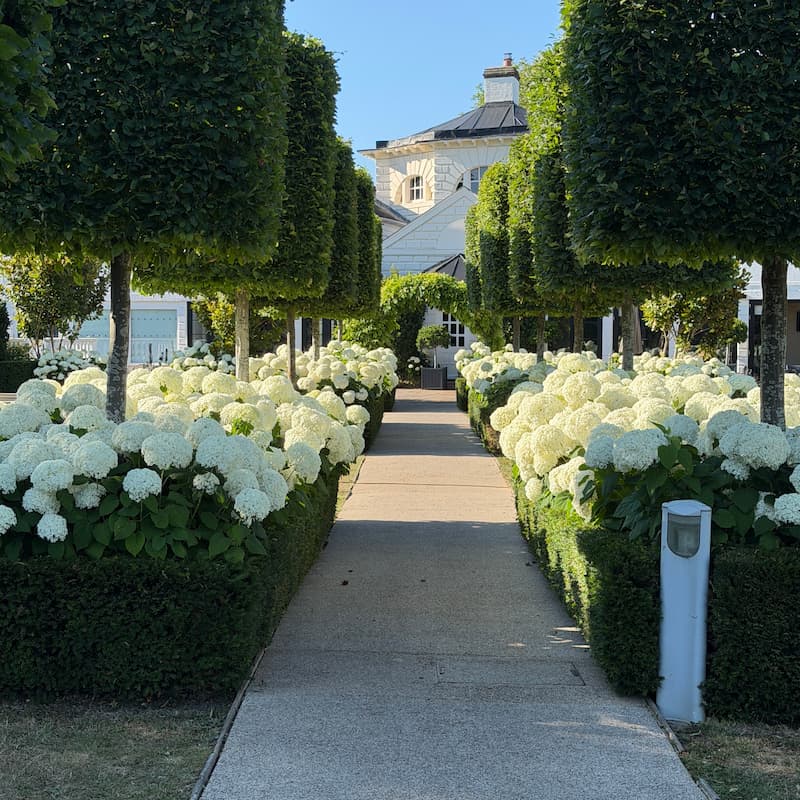
During my two-night press visit in July, I was pleasantly immersed in relaxed British luxury and learned how memorable a Monkey Island Estate meeting or incentive can be for high-end groups.
Meetings and events are very important here, says Cedric Horgnies, Area General Manager, YTL Hotels, who joined me for a chat on the lovely dining room terrace overlooking the estate’s sweeping green lawns. In fact, he notes, corporate groups make up 60 percent of Monkey Island’s clientele, with a strong and growing American presence and increasing numbers of full island buyouts. “This is a great location with the feel of a countryside retreat while remaining close to London. It really is amazing to think of how close we are to the city and the airport.”
Plenty of indoor and outdoor event space includes not only dedicated meeting rooms in the historic Pavilion building but also manicured riverfront lawns and several stand-alone residences.
“We have what you’d expect from any five-star hotel, but then we tailor to the needs of the company, such as providing extra bandwidth for an outdoor presentation and setting up activities difficult to do in an urban hotel,” says Horgnies.
Popular group activities range from dragon boat races and excursions to Windsor Castle on the River Thames, to falconry demonstrations and survival skills training on the grounds of the resort. Meeting here is truly an upper-echelon English immersion: the Marlborough Ballroom has welcomed not only top-tier corporate groups but also British royalty such as Prince William and his son George.
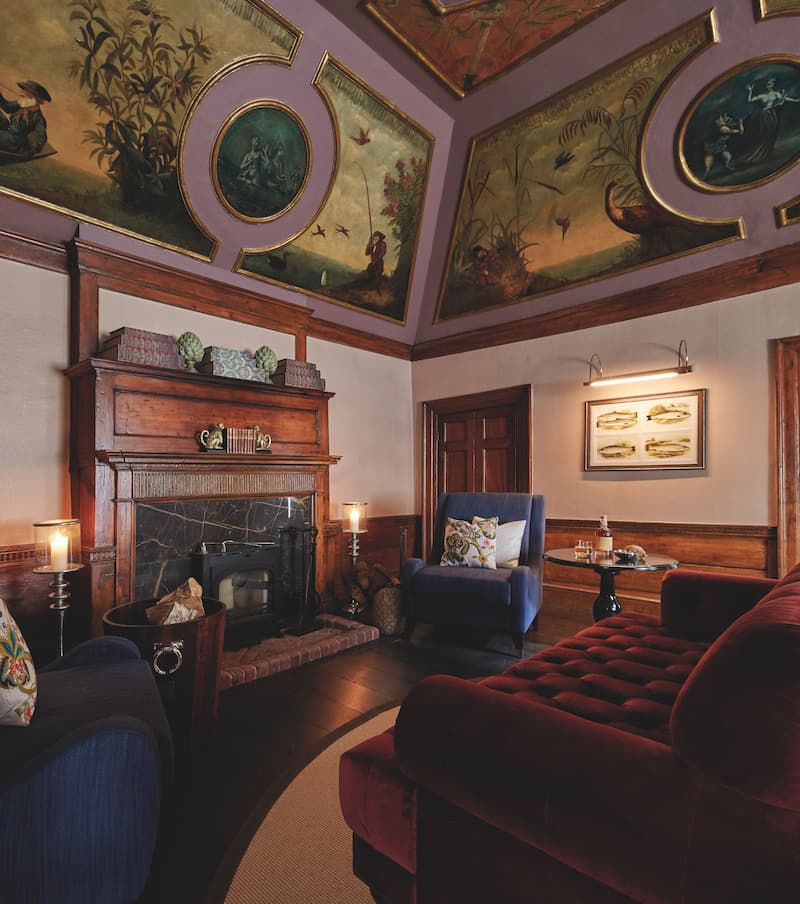
My guest room in the historic Temple building was compact yet elegant, with a terrace overlooking the grounds. The Temple building has a small, posh indoor lounge and a lovely outdoor patio as well, feeling less like a hotel and more like a historic country residence. Among the highlights of my visit was a leisurely float on the Thames in the resort’s river boat. While the boat can be self-guiding, I was lucky to have Hotel Manager Kevin Ramm as driver and guide, sharing stories of the fabled river and Monkey Island history.
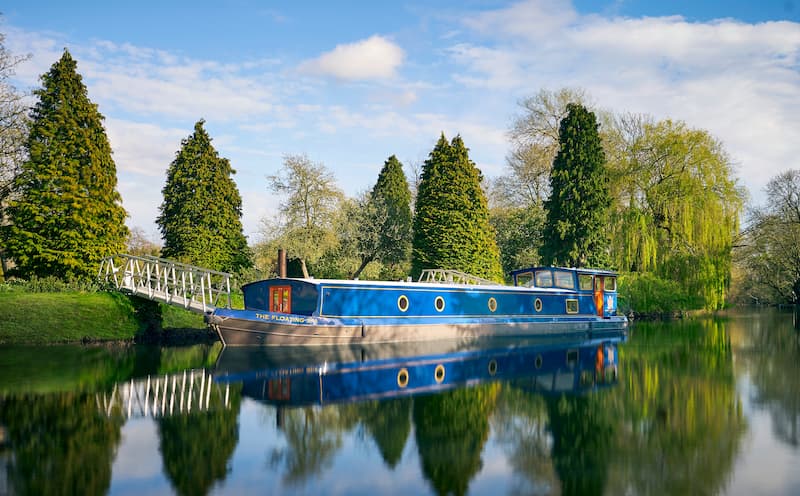
Another singular experience was a massage at the resort’s Floating Spa, a custom-built, wide-beam English canal boat moored on the banks of the Thames. Due to historic preservation requirements, the resort was not able to construct a dedicated spa building—hence this first-of-its-kind spa boat. I opted for the signature massage, which takes place lying on a bed of heated water. My gifted therapist, Hana, individually tailored the treatment until I emerged in a puddle of relaxation.
The dining experiences on site are delicious, but attendees shouldn’t miss a meal in the historic village of Bray—a five-minute drive or 20-minute walk from the island. What’s remarkable about this tiny village is that it has two three-Michelin-star restaurants—The Waterside Inn by Alain Roux and Heston Blumenthal’s The Fat Duck. A popular elevated dining experience that can be reserved for corporate groups, says Horgnies, is a private meal at the Hind’s Head Pub catered by the Michelin-starred Fat Duck restaurant next door (and owned by the same chef). I can also attest to the exceptionally fresh and tasty pub food at the Hinds Head, a popular local spot where my shared dinner of halibut and fish & chips was heaven on a plate.