

Check out these live-experience trends that are resetting and reshaping events in 2026.
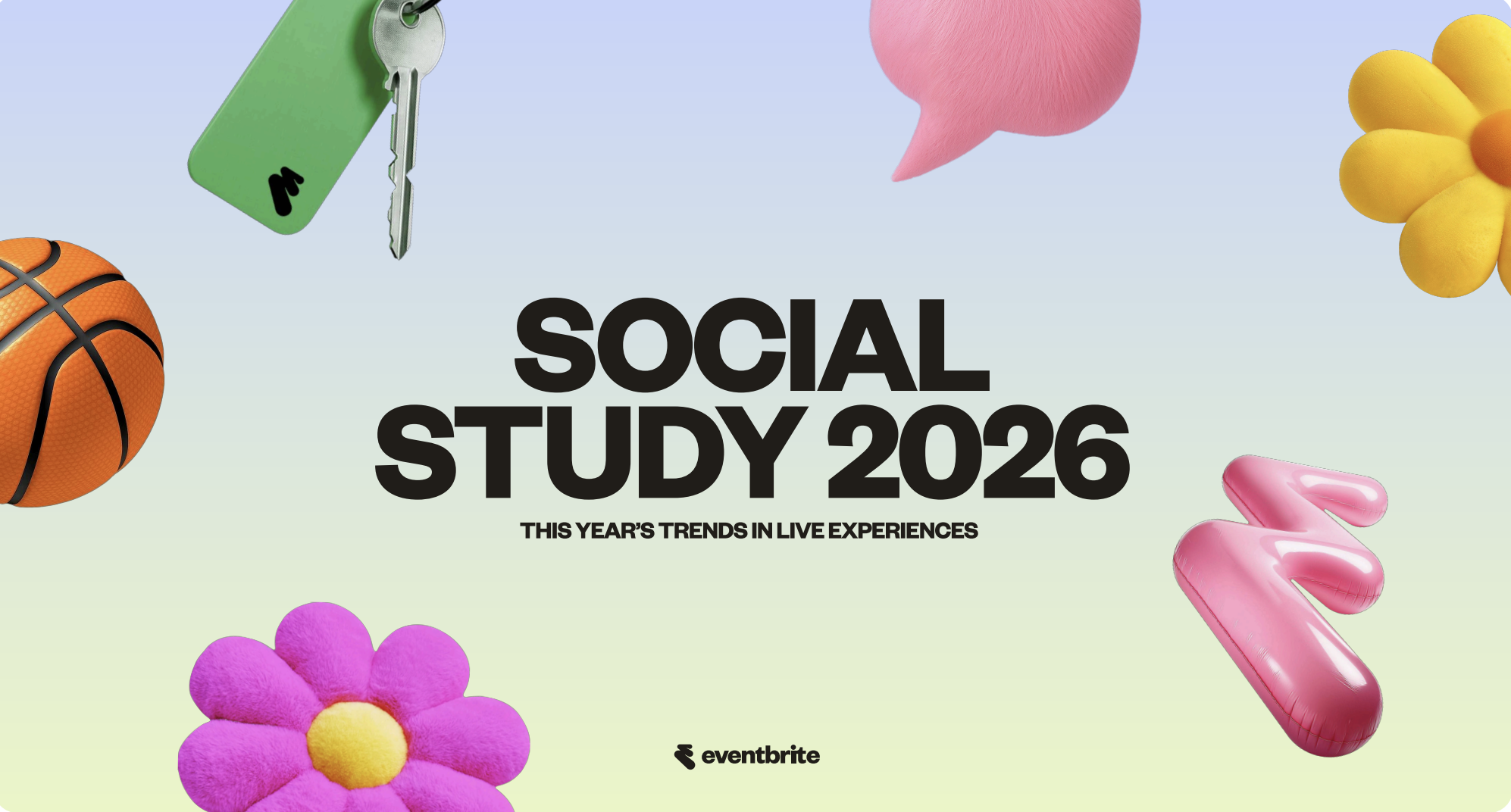
After years of hyper-curated programming and digital-first connection, live events are entering a reset. According to Eventbrite’s Social Study 2026, Gen Z and Millennials — the cohorts increasingly driving attendance, influence and cultural momentum — are rejecting polished perfection in favor of experiences that feel human, local and unrepeatable.
For meeting and event planners, this shift signals a meaningful change in what audiences value — and how successful events will be designed in the year ahead.
From “Why We Gather” to “How It Feels”
Nearly eight in 10 Gen Z and Millennial respondents expect to attend more live events in the coming year, confirming that demand for in-person experiences remains strong. But the motivation has evolved, the study found. Instead of asking why they should attend, audiences are focused on how an event makes them feel.
More than half say they prefer events that feel “under the radar,” discovered through word-of-mouth rather than feeds or algorithms. Fifty-eight percent want events that feel like they are one-of a kind. Forget predictability: In this environment, it’s all about authenticity.
This means planners have to challenge some long-standing assumptions about scale, standardization and repeatable formats. The value proposition is shifting from “bigger and better” to “more personal and more present.”
Off-Script Energy Is a Feature, not a Risk
Spontaneity is now a key marker of quality. Nearly 80% of respondents ages 18–35 say spontaneity is important at events, and 44% say it helps them feel more present or break routine. Unusual venues matter, too: 44% are more likely to spend money to attend an event held in a unique or unexpected location.
Rather than flawless execution, audiences are responding to moments that feel unscripted — think surprise elements, flexible programming and environments that leave room for discovery. This may mean meeting and conference planners have to loosen up rigid agendas, design optional experiences, or create moments where attendees can shape how the event unfolds rather than simply follow a preordained schedule.
Soft Socializing Replaces Forced Networking
One of the study’s most telling signals is the rise of “soft socializing” where people can make connections without pressure. While social interaction still matters, more than half of respondents say they don’t want it to be the main focus of an event. Forty-five percent want control over how and when they engage, and 41% value spaces where they can observe without participating.
This may mean rethinking the traditional networking formats now that the usual loud receptions, mandatory mixers and icebreakers increasingly may be misaligned with attendee preferences. Activity-based programming, such as workshops, creative sessions and silent or low-pressure environments, allows connection to happen organically, on attendees’ terms, according to the study.
Participation Beats Performance
Attendees also want agency. Nearly three-quarters say they are more likely to attend events tied to causes they care about, and one-third want opportunities to actively participate rather than just watch.
Cause-based gatherings, collaborative projects and skill-sharing experiences are gaining traction because they allow people to feel useful, not performative. Some ways to punch up the programming along these lines could mean incorporating hands-on activations, community engagement initiatives or programming that leaves a tangible impact, either locally or within the host organization.
Local and Layered Experiences Win
Despite the return of travel and large-scale events, local connection has become even more important. Nearly 90% of respondents say it matters that events help them feel connected to their local host community. Audiences are gravitating toward experiences that reflect the local culture, neighborhoods and people, rather than generic environments that they could experience pretty much anywhere.
At the same time, attendees are drawn to “mashup” events that blend interests, cultures and formats. Nearly 70% are curious about how different worlds interact, signaling demand for interdisciplinary programming that reflects attendees as whole humans, not just job titles.
While the study strongly suggests resetting to real, that doesn’t mean it is advising planners to abandon structure or professionalism. Instead, it emphasizes a need to recalibrate priorities that put presence over polish and participation over performance. It concludes that the most successful events in 2026 will be those that feel alive, personal and grounded in real connection — things no virtual platform can replicate.
You May Also Be Interested In…
Exclusive: The Rise of Micro-Events: Small Rooms, Big Impact
Exclusive: What’s Trending Now in Trade Shows
Community Building, Grateful-Dead Style