

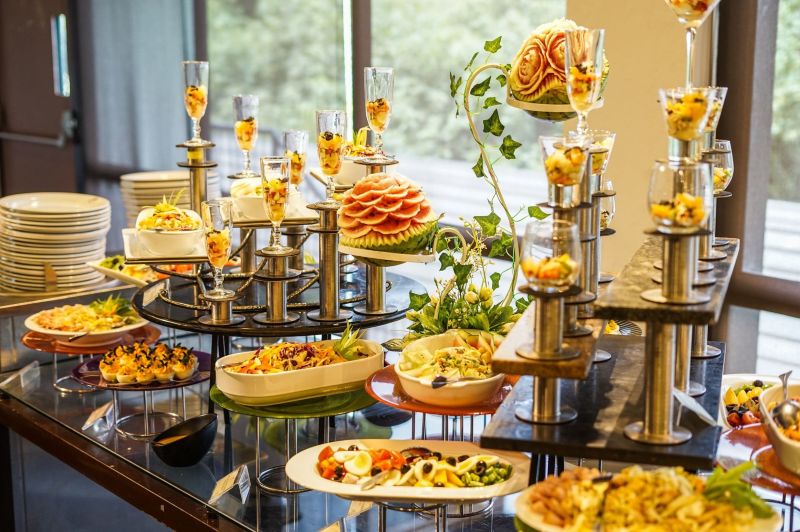

Planners, it’s time to step up to the plate and confront one of the most unsustainable parts of many events—food waste.
Food waste has emerged as a critical sustainability challenge in incentive travel and event planning in general.
Last week’s SITE webinar—Beyond the Plate: Exploring Food Waste in Incentives and Events tackled this meaty subject and came up with some practical, actionable and pain-free ways to mitigate food waste while prioritizing taste.
Moderated by Courtney Lomann of Courtney Lohmann Consulting, LLC, the panelists included Natalie Fulton, Trade Manager of Tourism New Zealand; Norma Alberico, President & Director of Sales, IGS Collection; and Chris Locke, Head of Fermentation & R&D for the zero-waste restaurant Baldio in Mexico City.
Following are some of the main points covered:
Why is food waste such a critical issue in incentives and events?

Norma Alberico—33 percent of food produced worldwide is wasted. This amounts to a billion meals a day. Incentive programs and corporate events are tasked with aligning with ESG (Environmental, Social, and Governance standards).
Natalie Fulton—When you drill down on the stats, how much of each menu item affects these numbers? Beef produces the most carbon dioxide. When you look at the amount of water needed for coffee, it’s much more than tea. Bread is a big source of waste in events… about 54 percent of the bread produced at events is wasted.
Chris Locke—We’d be remiss if we didn’t mention the state of global food insecurity. There are 2.3 billion in the world who face some type of food insecurity. 2.6 billion couldn’t afford a healthy diet in 2024. The value should be on nutrition.
What are some destination-wide initiatives or policies that help reduce food waste?

Natalie—Most of our initiatives are focused on the way we can benefit the land. The Tiaki Promise outlines what travelers can do to care for New Zealand. And Qualmark is our national accreditation program, recognized by the Global Sustainable Tourism Council. Most of our providers operate with some level of Qualmark. We have the new Te Pae Christchurch Convention Centre, the world’s first convention center to achieve net carbon zero certification.

How can planners work with venues and suppliers to reduce food waste?
Norma—Collaborate with venues and suppliers before, during and after the event. During, you can educate attendees with signage and after, analyze outcomes. In the UK, each of our historic manor houses has their own garden; from root to flower, they use the entire plant. We also have earned B Corp accreditation for sustainability.
Chris—Too Good to Go is an amazing app you can use. If we’re considering there’s going to be waste, we’ve already failed. You need flexibility… if we’re not flexible in what we want, that truly leads to more waste. If a venue ordered more than they needed, can you use some of these things that were ordered but not used?
Natalie—Pick activities that increase attendees’ connection to food. We have programs where you can go foraging for food. You also take part in cooking what you find.
What does a zero-waste program look like at a restaurant and on an incentive?

Chris—We try to ‘close the loop’ on every dish, so that everything is used. So if you’re having a dish with carrots, how are you going to use the tops? It’s not ‘leftover food,’ it’s re-creating something new from what you already have and viewing everything as a potential ingredient. This is very much how an event can be designed. From a guest perspective, it feels like a normal, delicious dining experience.
Natalie—The beets in the beet salad the night before are beet hummus the next day. Some chefs turn their leftover breads into craft beers. Focus on fare that is lighter. Maybe don’t have a three-course lunch; save the dessert for afternoon break.
Norma—It isn’t possible to eliminate food waste entirely at hotels, but food is rescued every month from different locations to donate. Feeding America and Refed are two great sources if you’re looking for food donations. At one of our properties, chefs preserve fresh food for winter months—’snout to tail,’ using all parts of the animal.
Chris—Carbon footprints link to food waste; for example, the carbon footprint of meat and dairy is more than vegetables. New Zealand lamb, just because of the way the animals are raised, is one of the smallest carbon footprints in the world. They don’t use the same metrics as Europe. So even with shipping, New Zealand lamb has a lower carbon footprint. These are important things to consider when you’re considering if local is always better.
What are the best ways to align stakeholders and measure success?
Natalie—It’s important to track it all and really communicate those figures. You may notice that only 50 percent are showing up for breakfast, or leaving dinner early. Using the data and amplifying what you’re doing is important.
Norma—Tracking KPI is very important. Some key KPIs are carbon footprint, waste generation rate, sustainable procurement, total food waste and food waste per guest.
Note: The EPA has a food waste hierarchy at hotelkitchen.org.
You May Also Be Interested In…
Madrid: ‘We Need More Than Meetings’