
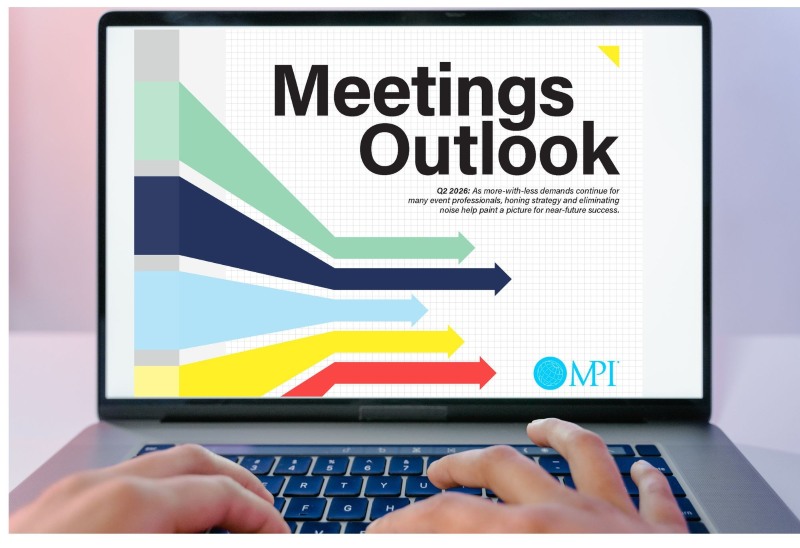
A new report says meeting and event professionals are heading into the second half of 2026 under mounting pressure to deliver bigger results with tighter resources.
MPI’s Q2 2026 Meetings Outlook shows an industry trying to balance rising costs, shifting attendee expectations and growing demands to prove the value of in-person events.
According to the report, overall business sentiment slipped this quarter after showing signs of improvement earlier in the year. Fewer respondents described conditions as favorable, while concerns about the months ahead increased. Attendance projections also weakened, with many planners expecting either flat or lower in-person turnout. That uncertainty is already influencing decisions around room blocks, staffing, sponsorships and F&B spending.
Budgets: A “Constant Problem”
Budgets may look slightly healthier on paper, but many planners say that doesn’t tell the whole story. Inflation and continued price increases are eating away at those gains, leaving planners to stretch dollars further while still meeting higher expectations from attendees and stakeholders.
One respondent described budgeting as a “constant problem,” noting that steady increases in costs have forced planners to build more flexibility into future forecasts and rethink how events are produced. Others said they are simplifying operations, relying on fewer vendors and looking for partners that can provide multiple services in order to save money.
Greater Expectations
At the same time, expectations for events themselves continue to evolve. Respondents said it is no longer enough for an event to simply run smoothly. Organizations want proof that meetings are creating real results, whether that means stronger engagement, new business opportunities or long-term community impact.
One planner noted that attendees are looking for more meaningful interaction and less passive content, pushing organizers to become more intentional about what every session, activity and networking opportunity is meant to accomplish.
The report also suggests that attendees are becoming more selective about where they spend their time and travel budgets. In-person events now have to offer something people cannot easily get online: genuine connection, valuable networking and experiences that feel worth the trip. That shift is driving interest in shorter, more flexible event formats, along with a greater focus on wellness, personalization and inclusivity.
Measuring Impact
Another major theme in the report is the industry’s growing focus on measuring the “human impact” of events. Most respondents said understanding attendee impact is now a high priority for their organizations, and many have begun building formal systems to track it. Post-event surveys remain the most common tool, though planners admitted measuring things like connection, inspiration and long-term influence is still difficult.
Despite the challenges, the overall mood of the report is more cautious than pessimistic. Event professionals are adapting by cutting unnecessary extras, focusing more carefully on attendee experience and becoming more strategic about where they invest time and money. The goal, many say, is not simply to spend less, but to protect the parts of live events that matter most.
Read the full report here.