

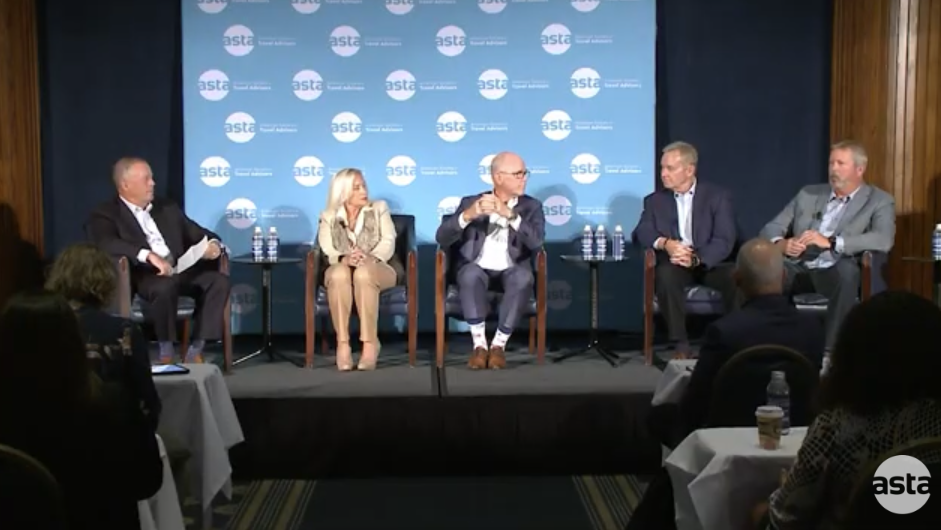
This week, a panel titled “Corporate ROI: The State of the TMC in 2025 and Beyond” presented new ASTA research on Travel Management Companies (TMCs) and their adaptation to changing market demands.
The panel took place at the American Society of Travel Advisors (ASTA) release of the 2025 ASTA Travel Industry Forecast at the National Press Club in Washington, D.C. The panel, one of two, presented during the event, was moderated by Lee Thomas, Co-Founder of Nous Travel and ASTA Board Chair.
The discussion highlighted the return on investment (ROI) that TMCs deliver to corporate travel programs. Thomas emphasized the importance of understanding how TMCs are evolving to meet the needs of businesses, noting: “[ASTA President] Zane talked earlier about the GBTA-ASTA [Global Business Travel Association] joint discovery and the return on investment. He talked about 20 cents per dollar spent on travel generating a return. I’d like to think of that more in terms of 10 percent.”
Jay Ellenby, President of Safe Harbors, elaborated on this point, stating, “If you go from a totally unmanaged travel account and implement a well-thought-out travel program, I think 25 or 30 percent is more realistic.” He pointed out that many companies are unaware of the potential savings from unused tickets, which can account for 7 to 10 percent of travel spend.
Kathy Bedell, Senior Vice President at BCD Travel, discussed the shift in corporate travel management following the pandemic. She stated, “Companies that were not managed really took a different look at it, and you had a lot of corporations wanting to get involved with an agency.” Bedell emphasized the importance of data in demonstrating the value of working with TMCs, particularly in negotiating with suppliers.
The conversation also touched on the necessity of effective communication and relationship-building in the industry. Bedell remarked, “It’s about relationships. This industry is about building relationships, and three words that I love to use are collaboration, communication and education.” This sentiment was echoed by other panelists, who emphasized the importance of understanding client needs and delivering personalized service.
As the discussion progressed, the panelists addressed the critical aspect of traveler care and the duty of care. Ellenby noted that companies are responsible for the well-being of their employees while they are traveling. He stated, “Every company that sends their employees out traveling is liable for their well-being.” This includes ensuring that travelers are in safe accommodations and have access to support in the event of an emergency.
Alex Eaton, CEO of World Travel Service, highlighted the risks associated with unmanaged travel. He explained, “When employees book travel independently, it creates significant risk for the company.” This underscores the importance of having a comprehensive travel management program in place.
The panel concluded with a focus on the evolving landscape of corporate travel and the need for TMCs to adapt to new challenges. You can watch the panel discussion here.