
Ruled by six different nations throughout its history and once the seat of Texas sovereignty, today’s San Antonio holds another title—UNESCO Creative City of Gastronomy, one of only two locations in the U.S. earning that honor (the other is Tucson).
Designated in 2017, the city draws on centuries of Native American, Spanish, Mexican and European influences to produce one of America’s most distinctive food cultures.
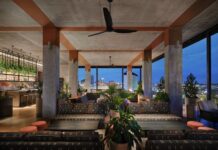
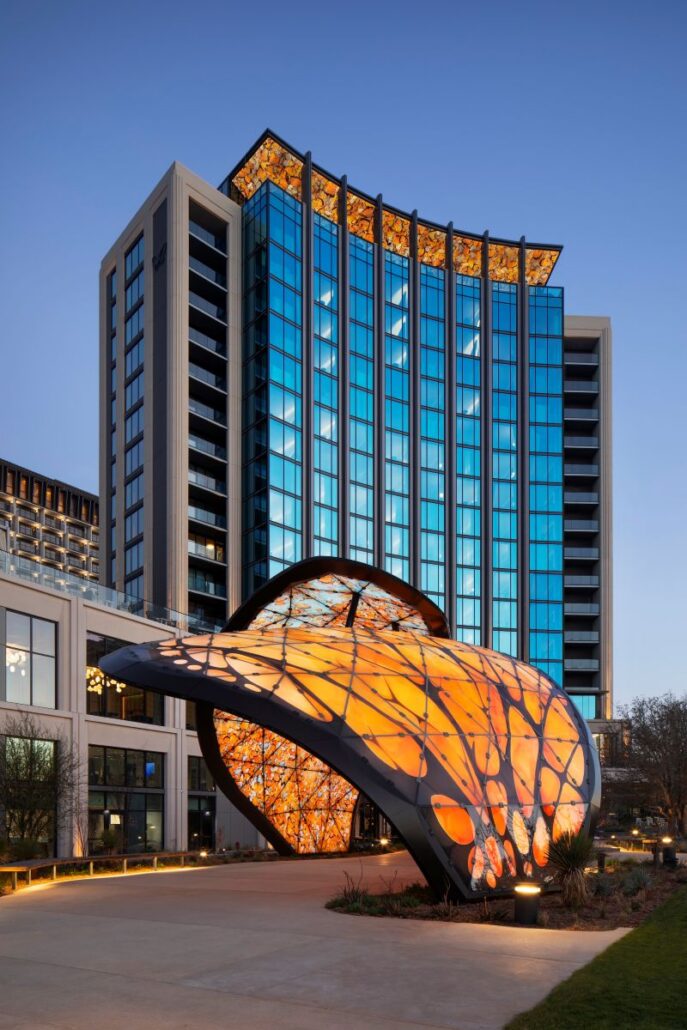
We discovered San Antonio’s culinary heritage alongside its history on a meetings media fam preceding MPI’s World Education Congress, held at the Henry B. Gonzalez Convention Center and surrounded by a collection of convention-friendly hotels, including our host property, the 200-room Monarch San Antonio, Curio Collection by Hilton.
Cruise Through Town
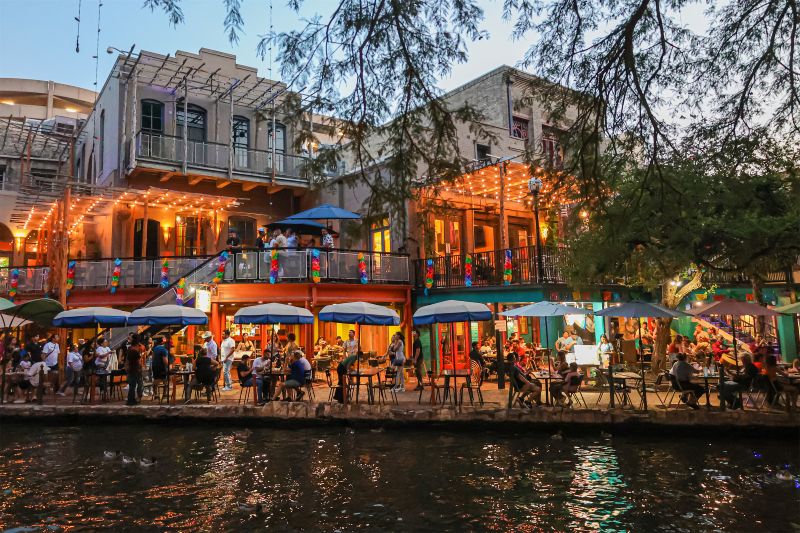
The city’s downtown is highly walkable, but it’s the staircases heading downward that hint at something unexpected. Descend and you’ll find the San Antonio River carving through the landscape below street level, giving rise to the city’s most beloved attraction: the River Walk. (A note for grammarians: Officially, River Walk is two words, but you’ll see it as one word as well.)
Gathering spot for dining, shopping, events and celebrations, the River Walk straddles both riverbanks and can be entirely navigated on foot, though many groups (like ours) opt for an excursion with the river’s sole operator, GO RIO River Cruises, offering customizable charters in colorful electric-powered barges for up to 37.
At one point, we passed through a unique lock and dam system—like a mini-Panama Canal—to navigate the river’s different water levels. But in case being raised by an aquatic elevator wasn’t enough excitement, we were serenaded the whole time by a small group of mariachi singers and dancers standing on the riverbank above us.
Pearl of a Destination
We disembarked at the Pearl District, one of the country’s standout examples of urban repurposing.
Tracing its roots to 1883, when it operated as one of San Antonio’s great breweries, today’s Pearl is a 22-acre complex transformed into a thriving district along the River Walk, home to restaurants, shops, a Saturday farmers market, live jazz and the third campus of the Culinary Institute of America. For groups, the venues range from the elegant Stable Hall—a 1,000-seat concert hall—to flexible studios and outdoor plazas, offering settings for everything from intimate executive sessions to large-scale corporate events. But there’s more.
“All of our restaurants are chef-driven and because of the Culinary Institute, we can do boot camps and cooking classes for groups,” said Beth Smith, VP of PR and Marketing for the real estate development firm Silver Ventures, as she guided us through the District. “When people come here for the first time, you see a lot of jaws drop.”
The District is home to four live music venues, including a karaoke room, but Smith says seven new restaurants will open their doors this year, with a luxe all-suite hotel, Perlen House, due in 2027.
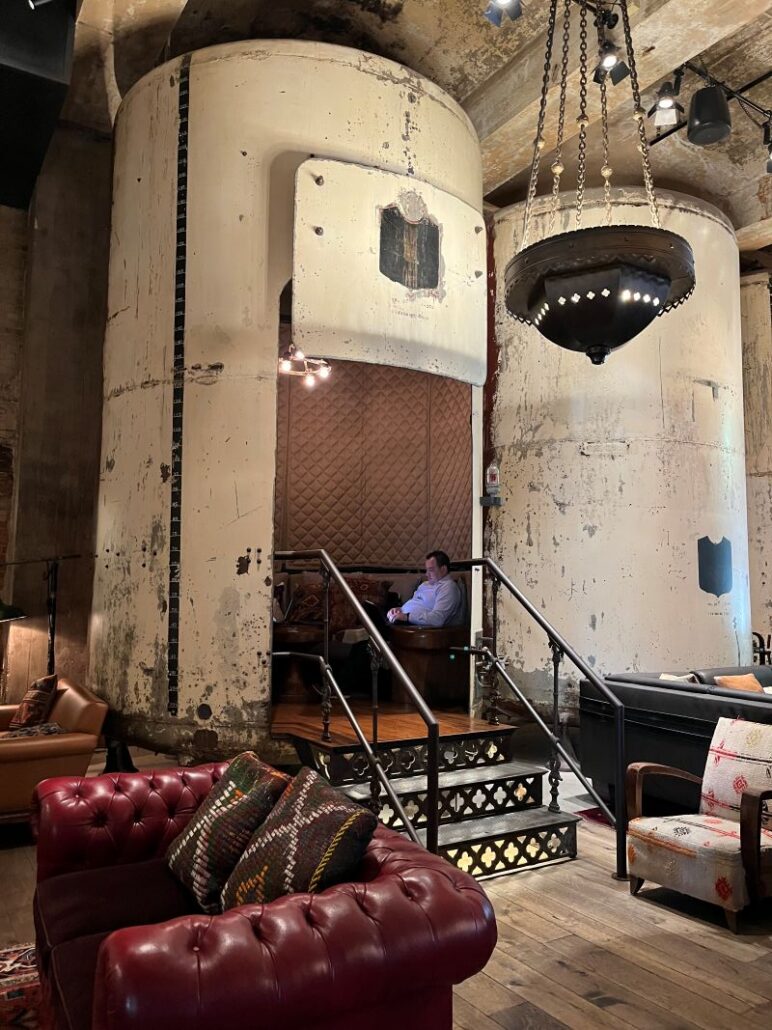
Our tour of the District also included a stop at what was the original brewery and is now the Hotel Emma, said to be actress/singer Cher’s favorite hotel. It wasn’t hard to see why. In addition to beautifully appointed rooms and suites, the original vats, brew tanks and industrial fixtures have all been repurposed around seating areas and, in one case, provided the privacy wall for a function room.
Wine, Dine and Mezcal
While we couldn’t sample everything this UNESCO Creative City of Gastronomy has to offer, we enjoyed a delicious introduction to its culinary scene, starting at the Hotel Emma where we had Supper for breakfast—that is, the restaurant’s name is Supper; and its sweet/savory menu included everything from Ricotta Beignets with strawberry jam to a destination-perfect Sweet Potato Bowl with Black Beans, Fried Egg and Avocado.
At our host hotel, the Monarch San Antonio, lunch soared at Aleteo—which means “flutter” in Spanish, continuing the hotel’s butterfly theme. A special menu prepared by Chef Jae H. Lee featured the house specialty, Black Garlic Skirt Steak, a best-selling favorite that racks up more than 100 orders a night.
We also feasted on house-made guacamole so good some wished they could make a meal of it alone. Then there was the Gulf Catch Ceviche, served in a creamy Coconut Leche de Tigre that was rich, bright, and utterly drinkable; it really should have come with a straw.
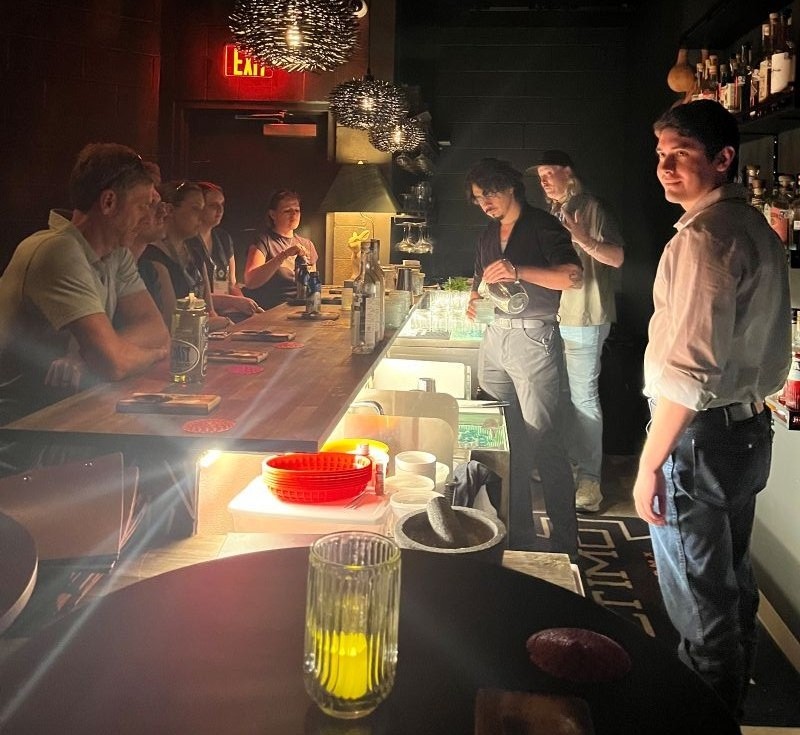
Our F&B tour continued at the newly opened Mexico Ceaty, a food emporium with eight different dining and drinking venues. The space brings together a full-service restaurant, a tortilleria, a fruteria, ceviche stands and churro vendors, offering plenty to explore in a single stop.
“It’s a revamped idea of a food court,” Chef Jason Dady told us.
After giving the secret password to an employee, we were ushered into Mexico Ceaty’s hidden speakeasy for an exclusive tasting of mezcal, a smoky Mexican spirit made from roasted agave hearts. Sipping from dried gourds, we tried different varieties of the powerful drink, finding out that true mezcal is only made in Mexico and that “all tequila is mezcal, but not all mezcal is tequila.” Unlike tequila, however, mezcal is not mass-produced.
The speakeasy is available for private events, as is the entire 23,000-square-foot Mexico Ceaty at the Shops at Rivercenter. Set along the River Walk between the Alamo and the Convention Center, it’s ideally positioned for exploring downtown on foot. In San Antonio, “walkable” isn’t just a buzzword—it’s how the city reveals itself.
Remember This
In the heart of downtown San Antonio is the state’s emotional heart, The Alamo, which is in the midst of a $700 million transformation, one that will restore its original 12-acre battlefield footprint and reimagine it as a fully immersive historic experience.
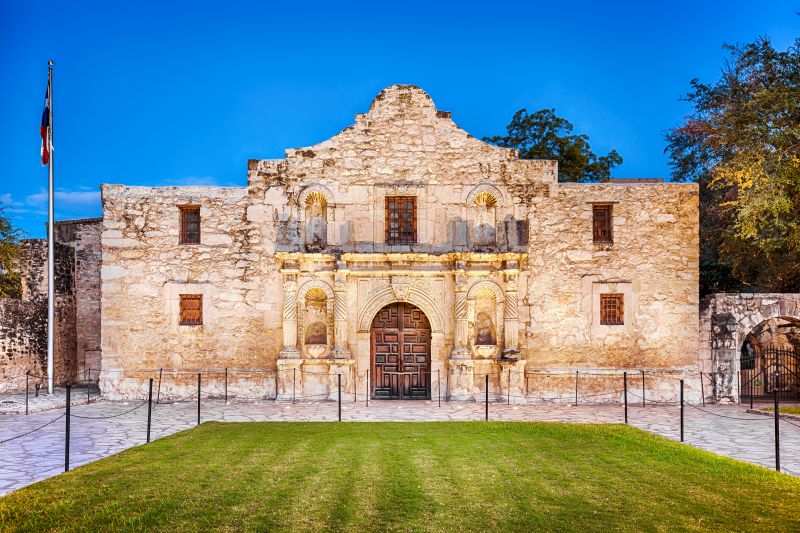
Only two of the Alamo’s original buildings stand—the Long Barrack and the Alamo Church—but at its height, the Alamo spanned 4.2 acres across what is now the downtown area.
Included in the campus-wide expansion and renovation will be the new 160,000-square-foot Alamo Visitor Center and Museum, slated for a spring 2028 opening. Newly opened is the Ralston Family Collections Center, situated behind the church and housing over 500 artifacts, including items from the collection of musician and Davy Crockett buff Phil Collins.
“There will be private event spaces and a guide on hand for groups,” said Emily Baucum, an Emmy Award winner who serves as Associate Director of Public Relations for The Alamo, who met with our group to give a quick tour. “The Alamo has the power of place.”
visitsanantonio.com/meeting-professionals; traveltexas.com/meetings