


A Q&A with experiential marketing expert Andrew Reid on the forces reshaping trade shows and live events.
Artificial intelligence. Cratering trust in established norms, traditions and organizations. An always-on digital world that constantly clamors for attention. And then there’s the stagnant budget trying to absorb ever-increasing costs, generational differences…but which of the many societal trends today actually are reshaping trade shows and live events?

To find out, Prevue recently caught up with Andrew Reid, VP of Strategy at Impact XM, a global experiential marketing agency that partners with leading associations and brands to design and produce impactful trade show and event experiences.
Prevue: What do you see as the most significant opportunities and challenges for trade shows and live events in 2026?
Reid: The biggest opportunity — and the biggest challenge — is what’s happening with AI, particularly agentic AI. We’re seeing it infiltrate everything, especially in trade shows and live events, but in a much more focused, controlled way than people often imagine.
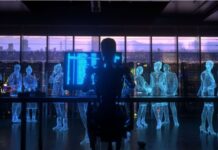
One of the most interesting applications is using AI as a concierge or chaperone on the show floor. You can create an entity with deep, curated knowledge that often goes deeper than any single human expert could go that can engage attendees in meaningful conversations. Combine that with holographic or humanoid interfaces, and suddenly you have something that feels human, speaks multiple languages, and adapts its message in real time.
If a CEO approaches, the conversation can focus on high-level commercial outcomes. If someone from compliance or IT engages, the same system can shift tone and content to address risk, governance or technical detail. That level of personalization is incredibly powerful.
The challenge, of course, is trust and data. True personalization requires capturing and retaining information over time, and doing that while staying compliant with GDPR and other regulations isn’t easy. We’re living in a world of deep distrust of institutions, brands and media, so unless a brand is highly trusted, people are understandably cautious about sharing data.
Prevue: There’s a lot of fear around AI replacing jobs. How does that play out in the event environment?
Reid: In reality, AI is often filling gaps where a human should have been but wasn’t. At a busy trade show, dozens of people might approach a booth with questions, and there simply aren’t enough staff available at every moment to help them.
An AI concierge can step in, answer questions, and, crucially, know when not to pretend it has the answer. It can say, “Sue is the expert on this topic. She’s tied up right now, but she’ll be available in 20 minutes.” That actually improves the human interaction rather than replacing it.
It also enables continuity. If I interact with a brand at a show this year and return six months later, the conversation doesn’t have to start from scratch. Instead of repeating chapter one, the experience can pick up at chapter three. That’s where events stop being isolated moments and start becoming part of an ongoing relationship.
Prevue: Beyond technology, what other shifts are shaping event design right now?
Reid: One of the biggest shifts is generational. For the first time, we have four generations actively participating in leadership and decision-making roles at events. Boomers and Gen X still value prestige, comfort and structured experiences. They’re happy with long-form content and recognizable, high-status speakers.
Millennials and Gen Z want something very different. They want to participate, interact and feel that they have a voice. For them, networking is more social than transactional: It’s about serendipity and shared experiences rather than formal exchanges of business cards.
That difference plays out in everything from venue design to programming. Boomers may gravitate toward keynote sessions with big-name speakers. Younger audiences are often more interested in authenticity — someone who shares a real journey, including failures, not just polished success.
For organizers, the challenge is balance. You can’t design exclusively for one cohort anymore. You have to create layered experiences that meet different expectations without doubling your budget.
Prevue: We’re also seeing changes in where and how events take place. What’s driving that?
Reid: There’s a clear move toward blending events into communities. South by Southwest is a great example — sessions happen across multiple venues embedded in a city rather than inside a single, controlled environment.
For younger audiences especially, that sense of being part of a broader cultural moment matters. They might attend a session, then step outside to a café, continue the conversation, and feel connected to the community hosting the event. That’s very different from the classic “everything happens inside the convention center” model.
At the same time, we’re seeing growth in self-contained venues that offer everything in house, from AV and production to technology. That can simplify logistics, but it also changes the agency ecosystem and how value is created across the supply chain.
Prevue: You’ve talked about a shift from industry-focused events to something broader. Can you explain that?
Reid: Absolutely. More and more events are organized around issues rather than industries. Sustainability, AI, talent, resilience — these challenges can’t be solved by a single sector.
Take aerospace as an example. It’s no longer just aerospace companies talking to each other. You need government, finance, climate tech, software and professional services in the room. That’s an ecosystem.
This fundamentally changes the role of events. It’s no longer just about showcasing products. It’s about roadmapping — bringing diverse stakeholders together to work through how solutions will actually be implemented. Workshops, breakouts and collaborative formats become just as important as exhibits.
Prevue: How does this ecosystem mindset affect year-round engagement?
Reid: Events are no longer points in time; they’re parts of programs. A marquee show like CES or Mobile World Congress sets the vision, but it can’t do everything.
What we’re seeing is a rise in “unpacked” events, which are often virtual, that happen throughout the year. These smaller sessions allow specific cohorts to dive deeper into what the big event introduced and translate ideas into action.
This is where communities come in. Technology, and AI in particular, has made it far easier to sustain business communities between events. AI can now moderate discussions, stimulate conversation and surface insights without requiring a human team to manage everything day to day.
You can even extract real-time intelligence: what topics are trending, what language people are using, what problems they’re struggling with. That insight then feeds back into the next live event, creating a virtuous cycle.
Prevue: Sustainability and DEI have both been under pressure recently, particularly in the U.S. How is that showing up in events?
Reid: There’s no question the language has changed. In many markets, sustainability and DEI are no longer positioned as table stakes in the way they were even a year or two ago. Some organizations have used the shifting political climate as an excuse to backpedal.
That said, much of the work is still happening — it’s just labeled differently. Companies may not call it “DEI,” but they’re still celebrating diverse leadership and inclusive innovation. It’s happening more quietly, below the radar.
From an event perspective, organizers have absorbed the lesson that representation matters. If you want to expand your audience and build ecosystems, your events need to feel welcoming and relevant to a wide range of people, regardless of what terminology is in vogue.
Prevue: Finally, what makes you optimistic — or cautious — about the future of live events?
Reid: I’m optimistic because we’re living in a world flooded with content, much of it untrustworthy or synthetic. In that environment, live experiences matter more, not less.
Face-to-face interaction cuts through the noise. It builds trust in a way digital content alone can’t. As AI accelerates content creation, the value of being in the room with real people, having real conversations, only increases.
The events industry is changing fast, and not every organization will keep up. But for those willing to rethink formats, embrace ecosystems and design for human connection — with technology as an enabler rather than a replacement — the future is incredibly exciting.
You May Also Be Interested In…
The Hidden Costs Behind Immersive Event Decor
Event Trends for 2026: Technology Meets Connection
Exclusive: Bishop-McCann’s Amber Heintz Talks Trends