


Teneo Hospitality Group President Jamie Bruce on why safety, flexibility and city-wide readiness have become non-negotiables in site selection.
The meeting and events industry has always had to account for what else is happening in a destination. But in recent years, the calculus has shifted. From multi-week concert residencies to World Cup cycles and recurring cultural festivals, mega-events are no longer occasional disruptions — they are a permanent feature of the destination landscape.
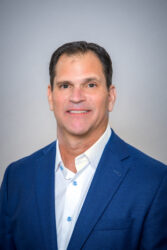
Prevue recently reached out to Jamie Bruce, President of Teneo Hospitality Group, which works with independent and luxury properties and corporate planners across North America, to learn more about how planners are adapting.
Prevue: Citywides are nothing new — large concerts, sporting events, and mega-conventions have taken over cities for decades. What has changed to make planners re-evaluate destinations based on how they handle mega-events?
Bruce: Certainly, planners have always had to monitor and navigate large-scale events and their potential impact on programs — developing contingency plans and accommodation optionality is key. More recently, however, safety and security have added a new layer of decision-making.
Mega-events have unfortunately become a magnet for disruptions: strikes, protests and potentially violence. In addition to a venue’s on-site security, planners must now consider whether the destination itself is prepared to ensure guests’ safety. Any uncertainty may mean choosing an alternate city.
Prevue: How are planners using mega-events to evaluate a destination’s appeal for their specific meeting or event?
Bruce: Mega-events aren’t often the sole reason a planner selects a destination — unless that happens to be the appeal, like a fan club gathering in the same city as a championship. Rather, they exist as a benefit or add-on opportunity. For example, a group staying at The Venetian Resort Las Vegas could arrange for guests to attend a concert at Sphere. An incentive trip could include tickets to the Super Bowl or a FIFA World Cup final. The event becomes part of the experience.
Prevue: What changes are planners making to their site-selection process as a result of how destinations handle mega-events?
Bruce: We’re all event professionals — we know how complex it can be to manage any event, let alone one impacting tens of thousands of people. If a destination can pull off a mega-event seamlessly and without incident, that plays strongly in their favor. Beyond operational performance, planners are asking: Does the city have enough properties to rapidly accommodate a group that has to relocate? Does it offer incentives if a group is impacted or forced to move? Security and contingency infrastructure are now core evaluation criteria.
Prevue: Are these changes new, or are they an extension of what some groups have been doing all along?
Bruce: Considerations like these have existed for years, but we’ve seen an increased abundance of caution among planners on behalf of their clients. Now, just like room counts and meeting square footage, security and safety are line items that must be addressed when reviewing a destination’s viability.
Prevue: It sounds like you’re saying that this is now more of a primary filter than a secondary concern. What implications do you draw from that for the future?
Bruce: I envision cities and municipalities becoming more transparent and forthcoming about the steps they’re taking to ensure not just public safety, but the continuation of business operations — including meetings and events happening during a mega-event. My hope is that this leads to stronger working relationships between cities and event organizers during the planning stages. The destinations that are proactive in this will be the long-term winners.
You May Also Be Interested In…
New MPI Meetings Outlook: Planners Cautiously Confident
ASTA Raises Concerns Over Social Media Disclosure Requirement
Business Travel Feels Riskier for Women