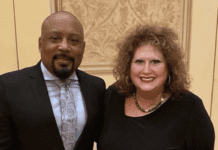


Author and speaker Ruth Rathblott says many attendees spend meetings managing what they’d rather people didn’t see. It doesn’t have to be that way.
For 25 years, Ruth Rathblott kept her left hand, born with a limb difference, in her pocket. At conferences, she chose her seat so no one would notice it and dreaded icebreakers that asked everyone to raise their hands. “I was so focused on that rather than being present in the actual conversation,” she says.
Rathblott, a former nonprofit CEO and the author of Singlehandedly and Unhide & Seek, calls that drain the “performance tax.” “That’s everything I’m managing about myself instead of being present for the experience,” she says. Far more attendees pay it than planners may realize. It’s the person in the back row, the one who skips the reception, and the attendee scrolling a phone at the edge of the room during a break. It’s easy to read as disengagement. Often, Rathblott says, it’s someone who doesn’t see a way in.
Registration forms that ask attendees to disclose their needs catch only a fraction of them. Rathblott herself checks “no,” even while carrying 15 things with one hand. Many people don’t want special attention, or they assume someone else needs it more. “Inclusion shouldn’t require a confession,” she says. Instead of asking what to accommodate, planners should ask, “How can we design this so fewer people have to ask?”
That means captioning breakouts as well as keynotes, vetting accessibility before the venue contract is signed, building in breaks, and telling attendees in advance what the physical experience will involve. It means asking the people who will actually use spaces like quiet rooms to help design them. And it means offering more than one way to participate. Like many people, Rathblott doesn’t enjoy walking up to a microphone for a Q&A, but she’ll readily ask a question on a note card or in a chat. “Participation doesn’t all have to look the same.”
Planners are trained to make chaos — the late speaker, the failed AV and the session running 15 minutes over, for example — invisible. But Rathblott says this skill comes with a cost: “If your best people are constantly making problems invisible, leadership may not realize there’s a problem until someone burns out or leaves,” Rathblott says.
The fix starts at the top, she adds. Leaders need to model saying, “I missed something” or “This isn’t sustainable,” and to pay attention to how they respond when things go wrong. “The way you react the first time someone brings you bad news decides whether you hear the next one.”
As companies pull back on DEI programs, Rathblott advises planners to stop sneaking inclusion content in through the back door and instead name the business problem it solves. When people hide their ideas, that’s an innovation problem; hidden mistakes become a risk problem; hidden overwhelm becomes a retention problem. Position sessions around what attendees will be able to do differently afterward. “You can take DEI out of the title,” she says, “but you can’t take difference out of the workplace.”
The goal, Rathblott says, is an event where people “don’t have to perform to belong.”