
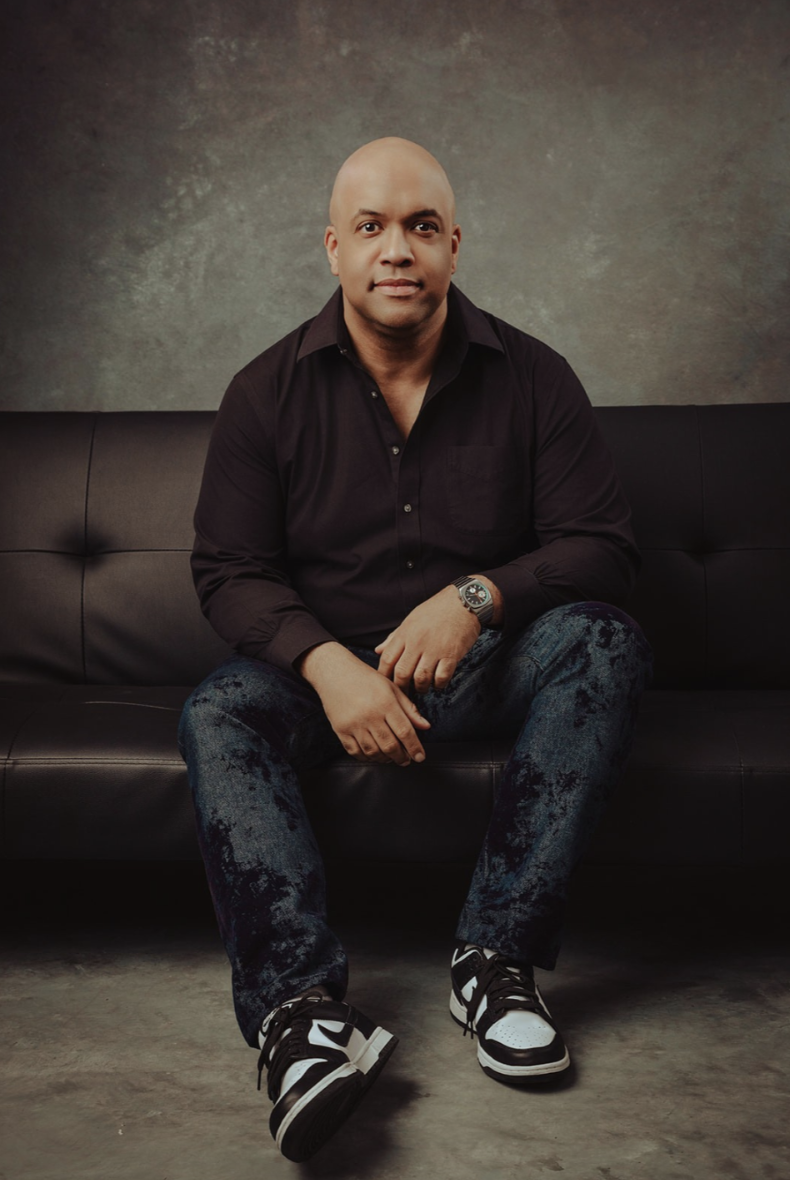
Mike Veny on how your keynote speaker choice can help solve the dual challenge of breaking through attendee overload and making everyone feel like they belong.
Meeting planners are under pressure to deliver more content, more connection and more proof that attendees matter. Professional speaker Mike Veny argues that one of the most overlooked ways to do all three is to rethink who you put on the stage.
A Certified Corporate Wellness Specialist, author of Transforming Stigma: How to Become a Mental Wellness Superhero, and host of the podcast Coffee With Mike, Veny draws on his own lifelong experience with mental illness and his background as a professional drummer to help audiences talk openly about mental health. Those who attended IMEX America this fall may have gotten to hear his message in person. For the rest of us, Prevue recently sat down with Veny to learn his thoughts on what speakers with disabilities bring to a program — and how can planners get it right.
Prevue: Planners are trying to fit a lot into their programs. Where does a speaker with a disability fit in?
Veny: According to PCMA, one of the biggest meeting constraints right now is human capacity. Attendees are simply getting way too much at these meetings. You can respond by eliminating certain things or spacing things out, but another thing you can do is alternate things that are repetitive, and one thing that’s very repetitive is content. We all know what a breakout session looks like. And you sit through enough keynote speakers, after a while they all start to sound the same.
The nice thing about bringing in a speaker with a disability is that it’s very, very different. Every disability is unique, and everyone’s story is unique. It moves the energy in a different direction, and it forces people to pause and see a different perspective.
Prevue: Why does that different perspective matter so much right now?
Veny: In a world where AI is dominating, one of the things people are focused on now is human connection. One of the ways we develop that is through something called perspective taking, which is understanding someone else’s point of view. That’s why bringing in a speaker with a disability isn’t just a good thing to do. It’s good business, and it’s good for attendees. In my opinion, it’s to a meeting planner’s advantage.
Prevue: There are likely far more attendees with disabilities in the room than planners realize, including invisible disabilities. What happens when those attendees see someone like themselves on stage?
Veny: There’s an idea in Seth Godin’s book This Is Marketing: People like us do things like this. We gravitate toward people who seem like us, whatever that “us” is. If you and I find out we’re both into basketball, we think, oh, you’re a person like me, we could probably connect on other levels too.
So when an attendee sees a speaker with a disability and thinks, “They’re like me,” it automatically creates a connection. That’s important, because so many people feel disconnected. Loneliness is at an all-time high. Having a speaker like that gives the attendee who might feel invisible a chance to feel visible. It also helps them feel that the people who produced the meeting care, that it’s not just about the money. That’s so important right now.
Prevue: What about attendees who don’t share the speaker’s experience?
Veny: They get something out of it too. Someone in the audience may not struggle with mental health the way I do, but they have a family member or a friend who does, and they come up to me afterward and say, “Mike, you helped me understand my friend.” That’s a huge moment. Even if people don’t have a particular disability themselves, everyone knows someone with a disability. And it can help people understand their own reactions to things better.
Prevue: Mental health got a lot of attention during the pandemic. Where does the conversation stand now?
Veny: We’ve gotten to a point where sometimes people talk about it and sometimes they don’t. It’s a hard subject to talk about, but it’s affecting everyone right now. We all know the state of the world.
What I’m learning when I speak at events is that mental health is a component of every other topic. I was recently a keynote at a sales conference for a company that’s really struggling with it right now, talking about mental health as it relates to sales. It’s important to keep addressing it, to keep reminding people about self-care, about noticing signs and symptoms in others, and about getting the help they need.
 Prevue: You open your presentations with a drum. How did drumming become part of your story?
Veny: I got into drumming in fifth grade. I was struggling with my mental health as a child, and the only thing that would calm me down was playing drums. My mom found a performing arts high school for me, and that changed my mental health journey. It didn’t take away the mental illness, but it made it more manageable and made it easier for me to navigate the world. Even now, I can talk to you like we’re doing, but if you said, “Go sit behind the drums and play,” that would be so much easier for me to communicate.
Prevue: You also lead group drumming for team building at conferences. What does that do beyond engaging the audience?
Veny: You could call it audience engagement, and that’s true, but it’s actually something deeper. The world feels very divided right now. When people do something like drumming, where everyone has to play the same rhythm, they don’t just get to understand unity. They get to physically feel it, which is so important right now. When everyone is on the beat together, the things that divide people don’t matter.
Prevue: What holds some planners back from booking a speaker with a disability?
Veny: They worry that anything involving accommodations is an extra expense, or a potential lawsuit. What’s important to remember is that this is about making people feel welcome.
One thing I recommend every planner do is add one question to their exit survey. It’s a question you could ask your family when they leave your house: Did you feel welcome here today? And if the answer is no: What could be improved so you do feel welcome? That can teach you so much, and people will be very honest. The interesting thing is that the answer is different for every group. What makes people feel welcome in one group is going to be different in another.