

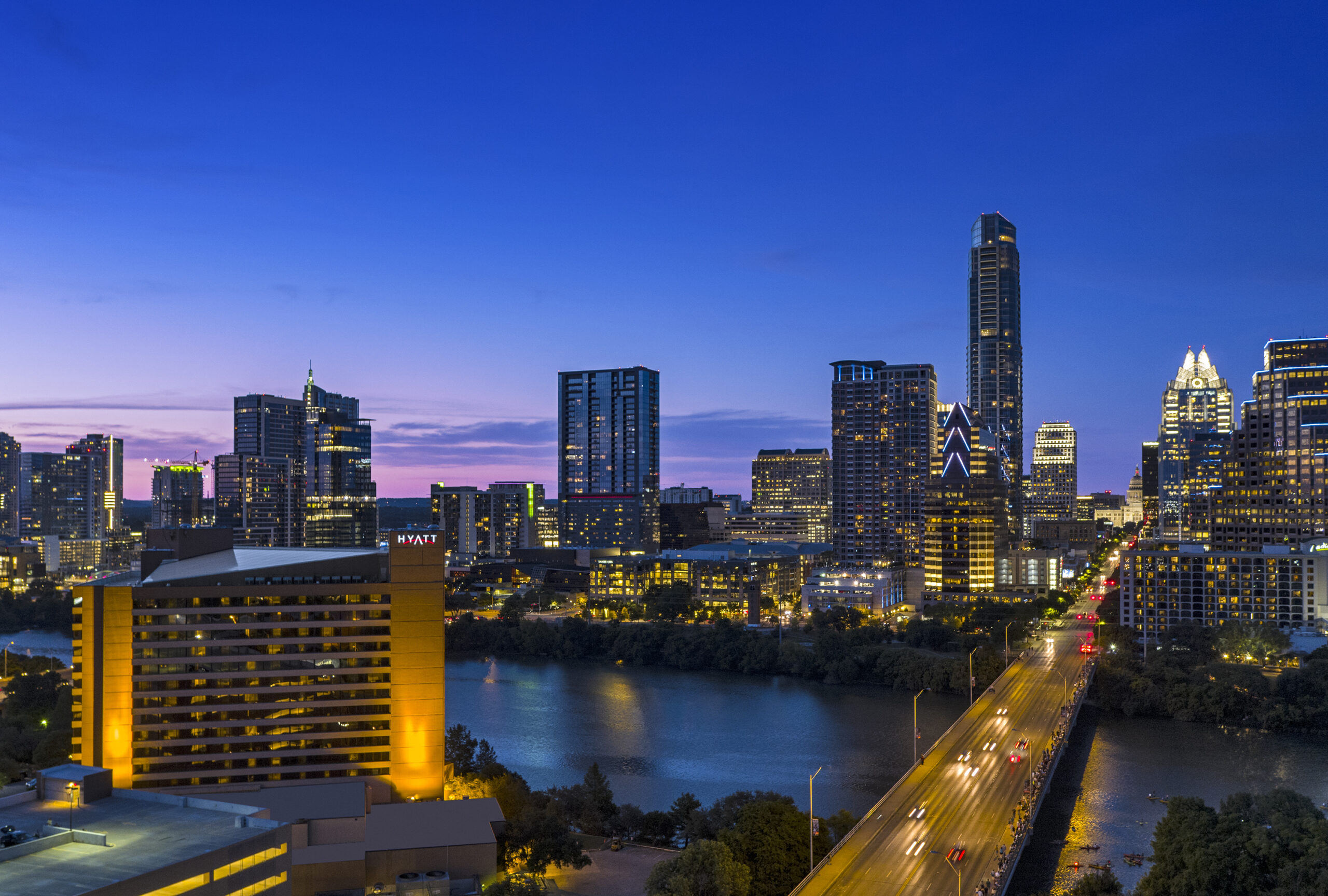

While Austin’s convention center is closed for a massive rebuild, the city is getting creative to serve group business with a decentralized event model called the mini-wide.
You’ve heard of city-wide conventions, of course, but a mini-wide? That’s the moniker Austin Convention and Visitors Bureau President and CEO Tom Noonan has hung on the strategy his city is using to manage its meetings and convention business while the Austin Convention Center (ACC) undergoes a full teardown and rebuild.

While city officials are eagerly anticipating the launch of the new, nearly twice-as-big ACC, slated for completion in 2028 and opening for business in 2029, that still leaves the city without a centralized home for its largest meetings and conventions. “We have a unique circumstance here — I don’t know of another destination that’s said, ‘Hey, let’s tear down our convention center and not have one for 40 months.’ I’d be worried about it if we didn’t have the large hotels and clusters of smaller hotels and the infrastructure we have. That’s what makes this a unique opportunity for our community to work together to bring group business to Austin.”
He adds, “Instead of city wides, the hotels in Austin are pulling together as a team to create the idea we’re calling ‘mini-wides,’” Noonan says. The mini-wide concept is a decentralized, multi-venue strategy that brings together hotels, other event venues and emerging event spaces across the city to accommodate those large groups that otherwise would have used the convention center.
This campus-style approach is designed to distribute large events across multiple hotel ballrooms at some of the city’s downtown hotels — such as the JW Marriott, Fairmont, Hilton and Omni, all of which feature hefty ballroom square footage — and some of the alternative and non-traditional venues the city is famous for, such as music clubs, historic buildings, outdoor spaces and other unique venues. New facilities near the Circuit of the Americas (COTA) are also in the works, with a planned mid-sized private convention center and hotel intended for smaller events, broadening the city’s event portfolio during the downtown facility’s rebuild.
Are the big groups liking that mini-wide concept? “We may not have a convention center right now, but we still have South by Southwest here,” says Noonan. South by Southwest (SXSW) is the famous, and famously huge, conference and festival that celebrates the convergence of technology, film, music, education and culture that originated and is still held in Austin every year. “You have to remember that South by Southwest was a campus-style event before we had the convention center, and now they’re just going back to their roots,” he explained. “Don’t get me wrong, they like having the convention center, but they’re partnering with us to use our hotels and other venues. They may be doing it differently, but they’re still going to be here in Austin because Austin is a big part of their brand, and they’re a big part of our brand.”
For meeting and event planners who aren’t quite sure how the mini-wide model will work for their group, Visit Austin’s team is reaching out to provide guidance for planners to help them navigate the mini-wide model, as well as promote the city’s rocking hospitality and cultural scene. “We’re talking to planners about how we can put together a package that’s unique to their group,” Noonan says. “We’re calling it ‘More Austin,’ as in — why not make your meeting more uniquely Austin? Why not use a music venue for an off-site event that’s right across the street from your hotel? Why not do something unusual and creative?”
He adds, “It’s going to be different from what we’ve offered before, and we see a lot of planners who are really interested in the idea.” As a backup, his team also is working to bolster the leisure tourism and sports business as well to make up for any business-event shortfall that may occur while the ACC is offline.
The overall messaging Visit Austin wants planners to hear is that Austin is “open for business.” The launch of the mini-wide concept’s strategic use of its hotel inventory, alternative venues, reimagined event models, and proactive support for planners is all part of the groundwork the city is laying to position itself as a stronger, even more competitive destination for meetings and events when the expanded convention center, the Unconventional ATX, opens in 2029.
You May Also Be Interested In…
Convention Stars Shine in Texas
The Main Event: Convention Centers Go Big
Orlando’s Convention Center: Expansion Starts in 2026