

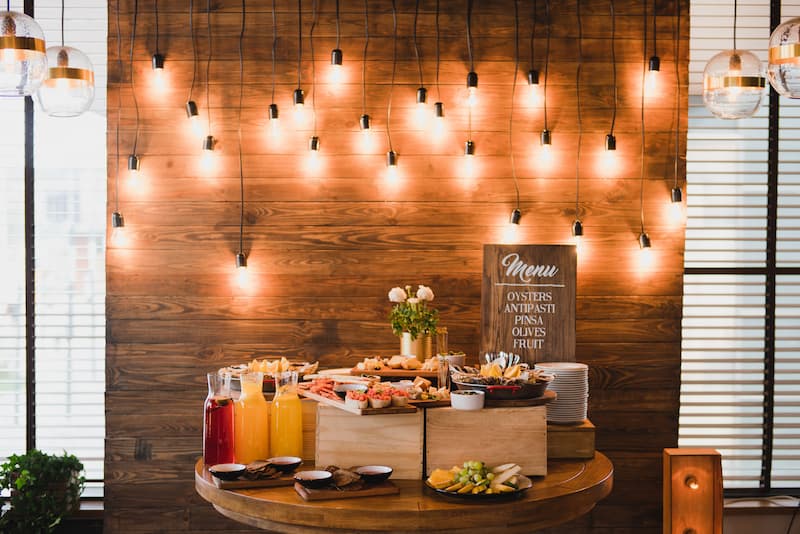
Tim Barrett, CMP, on why lighting food effectively should be a planning priority.
Who among us hasn’t clicked the flashlight on our phone in order to read a menu? Or asked a server to identify a passed hors d’oeuvre? These frustrations happen all the time to event attendees, says global meetings and event strategist Tim Barrett, CMP, in the latest edition of his weekly newsletter, Off-Menu Mondays. The cause is insufficient lighting. “When the menu card on the banquet round sits in the shadow of the centerpiece, when the station labels disappear into a dark corner underneath a chafing dish, when a passed tray arrives and nobody can tell what is on it, guests are left guessing. What is this? Can I eat it? Is there more coming? Every decision that went into the menu stops at the edge of the light.”
Barrett’s top tips for planners to ensure effective food lighting at events:
1. Walk the space in the event lighting, not just the walkthrough lighting. Ask to see the stations, rounds and bars at the lighting level attendees will actually experience.
2. View and taste the food in the light where it will be served, not just in a brightly-lit catering office. Dinners happen by candlelight and amber uplighting.
3. Keep the color on the walls, not on the food. Saturated hues of blue, purple and green set a mood but turn food grey. Ask what color will be hitting the culinary stations, and request neutral white light on the food itself.
4. Light the label, not just the dish. A dietary card that cannot be read at arm’s length has not done its job.
5. Give a passed tray its own light. Lit trays, a small lit card or a server with a handheld light will all let guests see clearly and choose comfortably.
6. Cue the kitchen with the stage. When lights drop for a keynote, service is often mid-pour or mid-clear. Share the lighting cues with the banquet captain.
7. Plan for the light changes that happen during sunset receptions and dinners. An outdoor reception that starts in daylight will end in the dark. There needs to be a lighting plan for the second half of the evening, not just the first.
8. Ask who programs the lighting on the food. Audiovisual lights the stage, décor lights the centerpieces and catering sets the stations. Make sure to identify who is managing the lighting that lands on menus and plates.