
Luxury versus legendary.
It’s often said that time is the ultimate luxury—a non-renewable resource. That’s exactly what Yellowknife, Northwest Territories gives you: The chance to slow down, take a breath and really take in the wonder of another place and moment. It’s a destination that goes beyond engagement to something more lasting. A place where stress and anxiety melt away, even in a land of snow and ice.
That was the late-winter landscape we encountered on an Incentive Canada FAM to Yellowknife, which sits 250 miles south of the Arctic Circle and boasts equally strong summer and shoulder seasons; but it was hard to imagine it any other way but crystalline and bright.
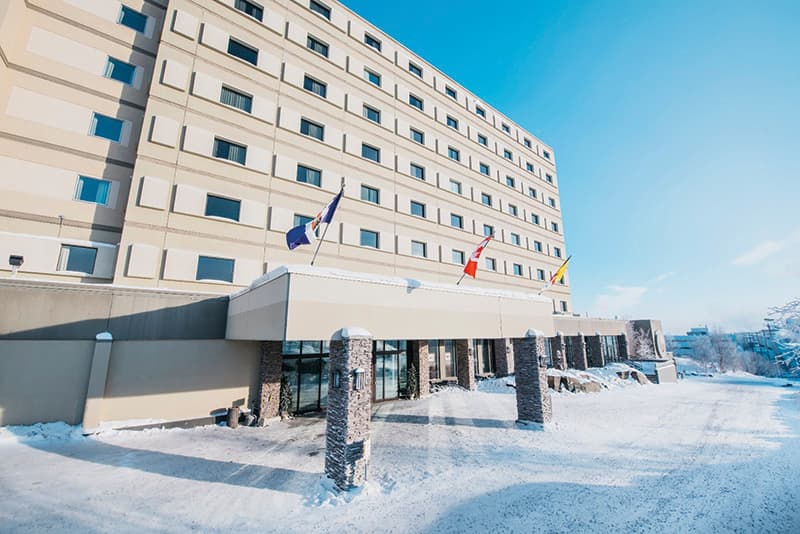
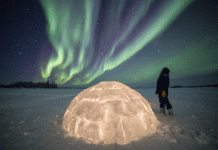
People trek to Yellowknife from all over the world—and we met many of them in the lobby of our host Explorer Hotel—to see the aurora borealis or northern lights, the dancing sky sculptures caused by solar winds meeting the Earth’s magnetic field.
That’s the scientific explanation; but Joe Bailey, our Dene guide with Indigenous-owned North Star Adventures, gave us a much more profound reason for the nightly shower of lights.
“We believe it is the spirits of our ancestors, greeting us and sending us messages,” Bailey told the group.
Our tour with North Star was during the day, with stops in Indigenous communities and sites including the Bush Pilot’s Monument, located atop a 6-story hill. But Bailey primarily considers himself the “Aurora Hunter,” saying “I know the best places to see the auroras…from the Indigenous perspective.”
Yellowknife’s combination of clear skies and positioning within the Auroral Oval, not to mention its unobstructed landscape, have earned it the title of “Aurora Capital of North America.” But this former gold rush and later diamond mining city holds other distinctions as well.
Yellowknife: Capital of Cool
There are variations on how Yellowknife came by its name, but most agree on its Indigenous connection with the Yellowknives Dene (“people of the yellow copper”), who mined the metal to craft knives and other utensils.
In addition, Yellowknife is the capital and only city in the Northwest Territories, with a population of 20,000. The entire territory has a population of 40,000, giving you an idea of the remoteness, and the attraction of solitude, in this part of Canada.
It’s easy to forget the outside world when your group is the only one snowmobiling across an arm of the massive Great Slave Lake with Yellowknife Outdoor Adventures, a quick van ride from the Explorer Hotel. Our group was led by owner and operator Carlos Gonzalez, who gave us a quick safety tutorial before we went outside to mount our vehicles. In addition to an exhilarating ride under a brilliant sun, the day included a stop at the Aurora Island Lodge, a cabin retreat where we enjoyed hot chocolate and cookies.
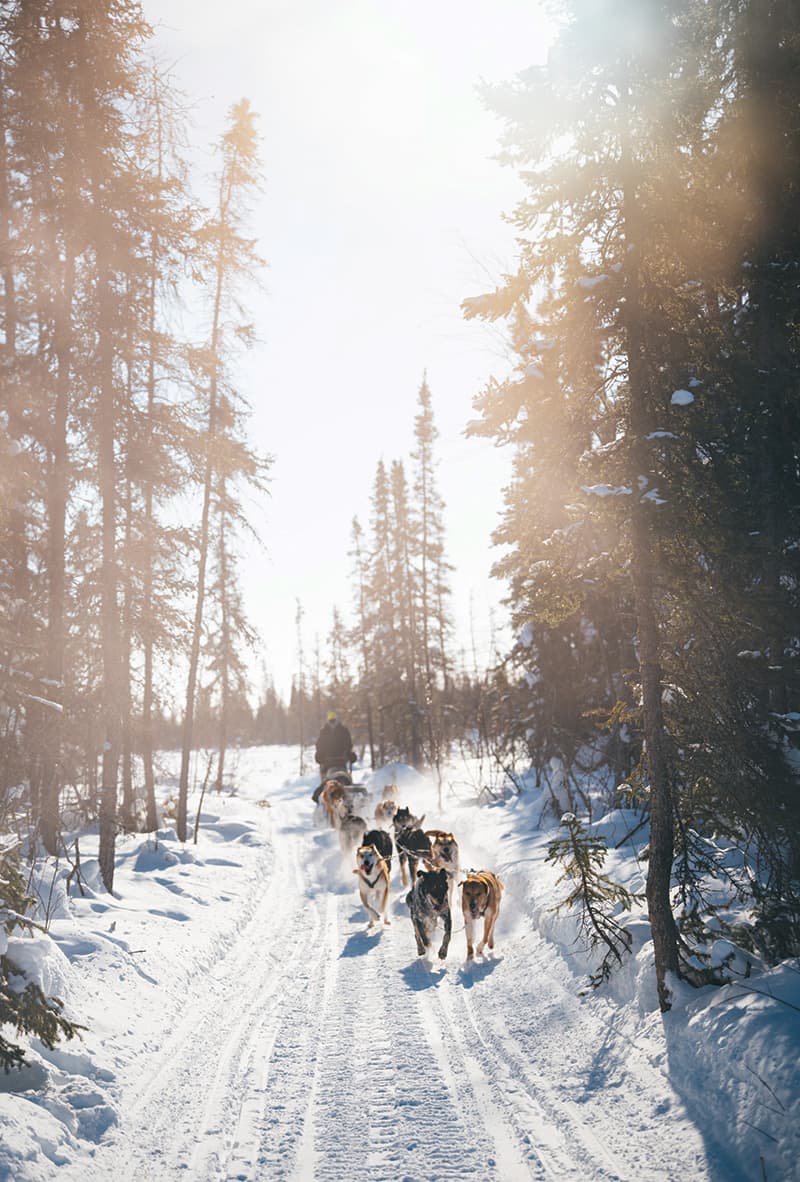
In fact, there were a lot of sweet and savory pit stops on this incentive trip, including at North of 60 Adventures, an Indigenous-owned, family-run tourism company located just outside the city. Here, sled dogs bayed and howled in anticipation of joining a pack pulling a sled of between four and five riders.
“Dashing through the snow” and snowshoeing across the frozen lake and through snowy terrain was followed by a lunch of homemade stew and bannock—the local fry bread—in the cozy Skydome.
Aurora Borealis Comes in View
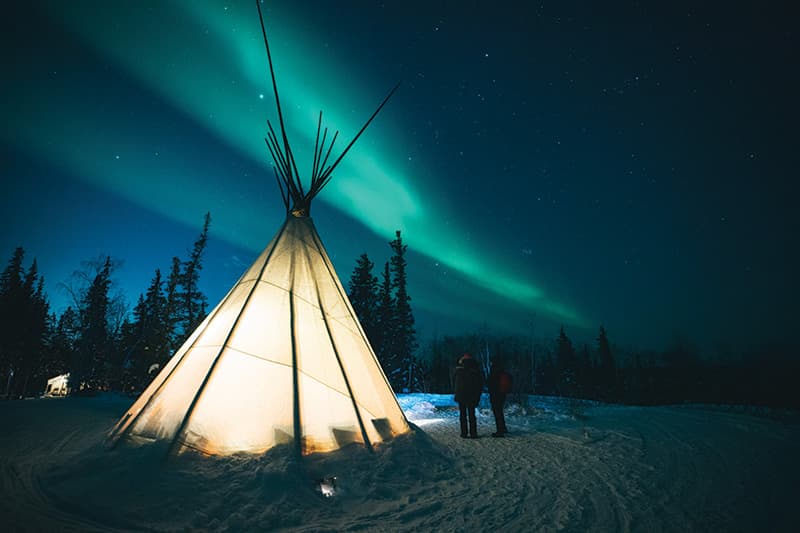
A winter playground by day, Yellowknife after dark is all about the auroras. After dining like kings in a private area at the Aurora Village—where the menu featured bison, Slave Lake fish and more bannock—our group took nighttime sled rides to enjoy prime aurora viewing from heated teepees and viewing pods.
While waiting for the auroras to appear, we enjoyed a variety of comforts, including both a teepee and cabin—offering seating, food and hot drinks—plus special outdoor swiveling seats allowing us to check out the auroras from every angle. The following night, after dinner at the Copperhouse Eatery + Lounge, aurora watching and storytelling converged on an excursion with B. Dene Adventures, whose founder Bobby Drygeese shared Yellowknives Dene history and led the group in a traditional drumming session.
Rich in Culture, Ready for Today
Despite its deep Indigenous roots and vibrant Indigenous presence, Yellowknife offers all the comforts and amenities of a modern destination, with venues that go far beyond the ordinary.
The Prince of Wales Northern Heritage Centre—where we had lunch and a roundtable discussion—has gathering space for groups; while the Yellowknife Visitor Centre bestows small yellow-knife pins as souvenirs.
For a far-north twist on the classic pub, the Woodyard Brewhouse & Eatery is available for a total buyout; as is the iconic Snow Castle—a hand-built snow and ice structure that hosts concerts, performances and workshops during the monthlong Snowking Winter Festival every March.
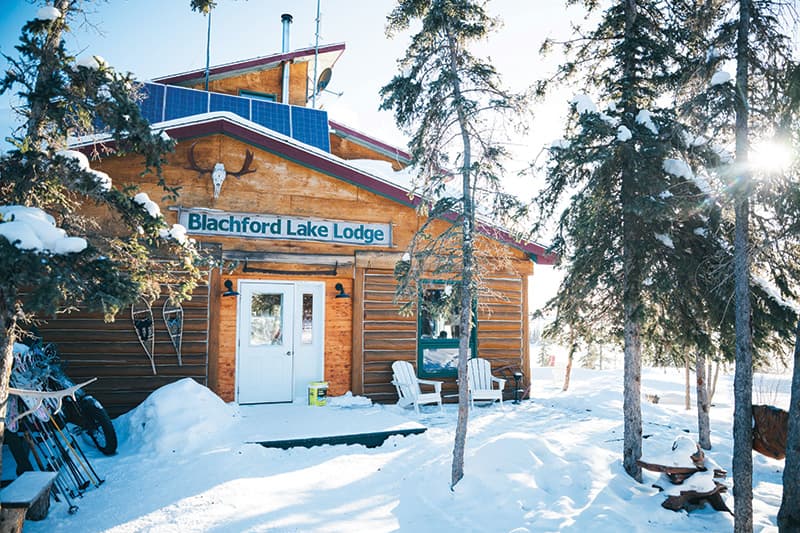
Our 259-room Explorer Hotel featured in-room perks like coffee, fridge and microwave along with 7,500 sf of event space, including a sun-washed conference room. The hotel also offers a complimentary shuttle from the Yellowknife Airport, which—in addition to being our arrival and departure point— was where we boarded a floatplane for a trip extension to Blachford Lodge, a remote fly-in wilderness retreat of log cabins and a main lodge.
Here, it’s just you and the ptarmigans, moose and foxes, who keep a safe distance from hiking groups like ours. The Lodge itself has every comfort, with electricity provided by solar panels and generators, an expansive dining area and comfy living room.
In addition to lodge rooms, visitors can opt for secluded log cabins with large windows for aurora viewing, WiFi, electricity and en-suite bathrooms.
Still, modern comforts exist here as a small, protected bubble, surrounded by a vast wilderness untouched by time. As Joel Walton, Sr. Director of Business Events for Destination Canada, told us: “It’s luxury vs. legendary.”
incentivecanada.ca; extraordinaryyk.com; travel.destinationcanada.com/en.us; spectactularnwt.com