
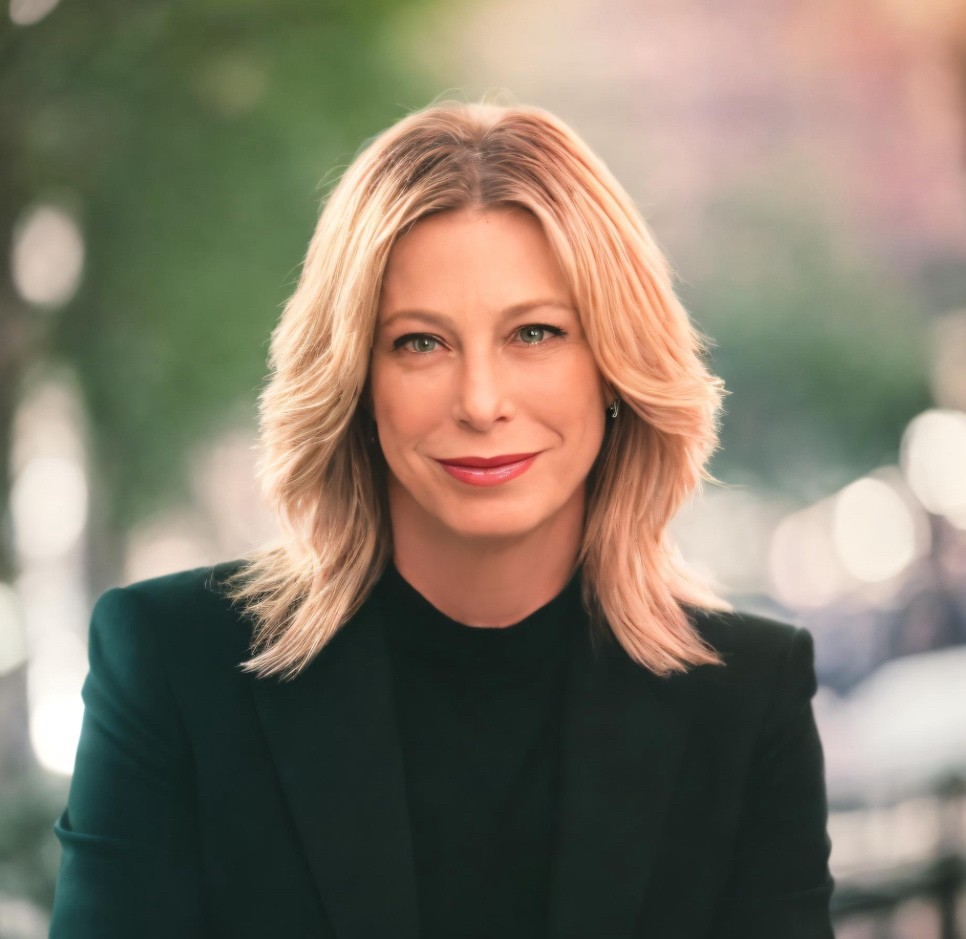
Hall des Lumières Managing Director Harley Hendrix on immersive design, authentic storytelling, and why the passive audience is officially over, thanks to Gen Z.
With over two decades in the events industry, Harley Hendrix has seen formats come and go. But Gen Z is creating a shift that feels different than what’s come before. As Managing Director of Hall des Lumières, a fully immersive event venue in New York City, Hendrix is at the forefront of a movement remaking how brands connect with audiences.
Prevue recently spoke with her about what Gen Z is actually demanding, why authenticity can’t be faked, and how planners at any budget level can start designing for the room they’re actually walking into.
What’s driving the shift in what corporate event attendees expect?
Gen Z isn’t randomly rebelling against corporate formats — they’re responding to how they grew up consuming information, building identity and evaluating authenticity. They’ve been raised on TikTok, Instagram and YouTube, where content is fast-paced, visually rich and participatory. By comparison, the static presentation format feels passive, and they disengage quickly. With Gen Z already making up 30% of the workforce, that share is only going to continue growing. But I’d also argue that older generations have always wanted something better — they just tolerated the old format because they didn’t feel they had a choice. Gen Z understands intuitively that you don’t have to sit there and take it.
How does that play out when you’re designing for a multigenerational audience?
Even Gen X — my generation — is consuming information differently now. We’re all on Instagram and TikTok; we’re being trained to absorb content the same way younger generations grew up on it. We just have a little more tolerance for the stoic, static format. But Gen Z needs formats that are faster, easier to engage with, more reflective of real people and built for sharing rather than delivering. So when you design an event today, you have to design for participation from the ground up — not as an afterthought.
What does “immersive” actually mean in practice?
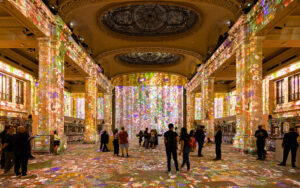
Immersive means environments that feel lived in, not overly branded or staged. It’s engaging the mind and the senses simultaneously — integrated soundscapes, interactive surfaces, 3D projection mapping. At Hall des Lumières, we’ve invested in technology where guests can touch a wall and it bursts into color, or touch a book and it bursts into verse. You can use projection to guide people — “yellow brick road” them through a demo area, for instance. The idea is to envelop your audience so that information is tied to a physical, sensory moment. Neuroscience backs this up: Contextual encoding makes content far easier to retrieve later. Emotional intensity acts as a memory anchor. And experiential learning — doing rather than watching — activates more areas of the brain. It’s not a gimmick. It’s how memory actually works.
Music is an underused tool in this space. People with dementia can lose enormous amounts of memory and still recall every word to a song from their childhood. If you want to anchor a message in someone’s memory, why wouldn’t you tie it to music? Every time they hear that piece again, the message comes back with it. Most planners don’t think about sound that way — but maybe they should.
You keep coming back to authenticity. What does that mean when you’re also trying to satisfy sponsors who are there to market something?
Gen Z is sold to constantly, and they’re deeply skeptical as a result. Highly scripted, jargon-heavy corporate messaging reads as inauthentic to them immediately. They want real people over a brand voice, imperfection over overproduction, transparency over spin. Lo-fi, behind-the-scenes, even messy content often performs better than a polished campaign because it feels real. Event design is moving from presentation to participation, from spectacle to meaning. When that shift is done well, it drives deeper connection, higher creative engagement and stronger memory retention than traditional formats ever could. The goal isn’t just to have people hear your message — it’s to give them a message they actually believe in.
How does inclusivity factor into immersive event design?
Inclusivity has evolved from a compliance mindset to a genuine design principle. It’s no longer just about who’s invited. Now the experience has to work for everyone in the room. That means a diverse speaker lineup that reflects different backgrounds and perspectives, accessibility built in from the start (not bolted on afterward) for mobility, sensory, language, and neurodiversity needs, and programming that considers different comfort levels with networking and social interaction. Not everyone wants to work a room of 400 people. Cultural awareness in food, music, visuals and messaging all falls under this umbrella. The point is to expand your audience and improve the experience for everyone.
 What can planners do right now, regardless of budget, to move in this direction?
Start with format. A static PowerPoint deck feels like a relic. Think magazine, not novel: Bursts of information, format changes, moments for participation. Gen Z prefers dialogue over monologue; they don’t want to be talked at. Build in ways for people to contribute, shape the experience, feel like active players rather than passive recipients.
Meetings and events are expected to be visually engaging now. Collaboration is expected to be dynamic. And if you’re tempted to over-polish everything, let it go. I say that as someone who struggles with this myself. The drive for perfection — every detail buttoned up, every message hitting every note — can actually work against you with this audience. They want community over hierarchy. They want to feel part of something. Meeting that expectation is absolutely changing the landscape of how events get done.