


With expanded convention facilities, more than $2 billion in urban investment and a value proposition that can make a meaningful difference for U.S. groups, Calgary is positioning itself to compete for meetings that might once have gone to larger Canadian destinations.
“The exchange rate certainly gets planners’ attention, but what makes Calgary compelling is that the value doesn’t require a compromise on the experience,” says David Woodward, Executive Director, Meetings & Conventions for Tourism Calgary. “For U.S. organizations, the strength of the U.S. dollar can translate into meaningful savings across an entire program, from accommodations and venues to food and beverage and offsite experiences.”
That equation has become particularly relevant as planners balance tighter budgets with expectations for more meaningful attendee experiences.
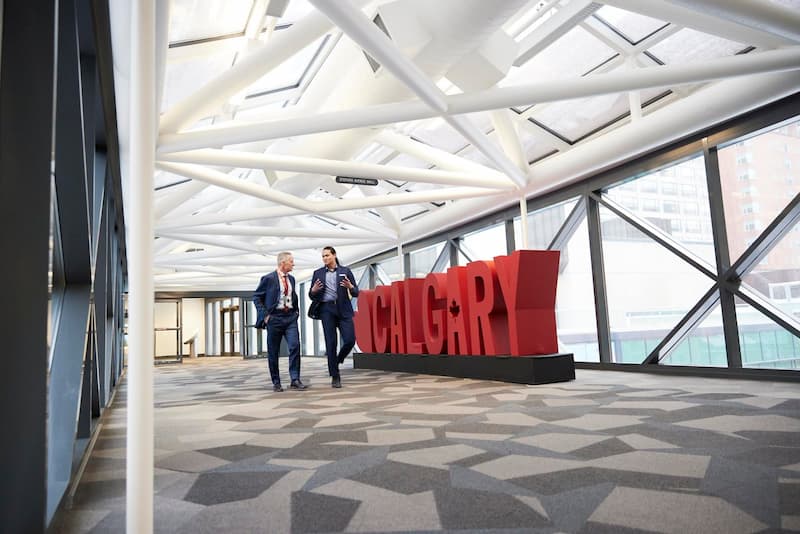
Making the Budget Go Further
For U.S. planners, Calgary’s value proposition starts with more than its currency.
Alberta has no provincial sales tax, which can help lower event costs compared with other major Canadian meeting destinations.
According to destination data, events in Calgary can cost approximately 7 percent less than in Vancouver, 8 percent less than in Toronto and 10 percent less than in Montreal. The current exchange rate can give U.S. groups roughly 35 percent more purchasing power.
The savings can then be redirected toward the elements that can make a program stand out, from upgraded food and beverage to offsite activities and more customized programming.
“Planners aren’t being asked to trade scale, quality or attendee experience for affordability,” Woodward says. “They have access to major convention facilities, premium hotels, an exciting culinary scene and a wide range of experiences, while having the opportunity to make their budgets go further.”
That last part is important. Calgary’s pitch isn’t simply that meetings can cost less. It’s that planners can potentially do more with the same budget.
The Space to Think Bigger
Calgary has also changed the physical equation.
The expansion of the BMO Centre at Stampede Park added 565,000 sf, bringing the facility’s total footprint to more than 1 million sf and its combined occupancy to 33,000 people. The venue includes 350,000 sf of contiguous exhibition space, approximately 150,000 sf of meeting space and a 50,000-sf ballroom.

For Calgary, that expansion represents more than additional square footage. It has changed the types of programs the city can pursue.
“The expansion of the BMO Centre has fundamentally changed the conversation for Calgary,” Woodward says. “With more than one million square feet overall and approximately 500,000 square feet of rentable event space, Calgary can compete for major national and international conventions, congresses, corporate meetings and large trade shows that may not previously have had Calgary on their consideration list.”
That flexibility allows planners to put thousands of attendees together for a general session or exhibition while creating smaller environments for breakouts, executive meetings and networking.
The Calgary TELUS Convention Centre, meanwhile, gives planners another 122,000-plus sf of flexible convention space in the heart of downtown.
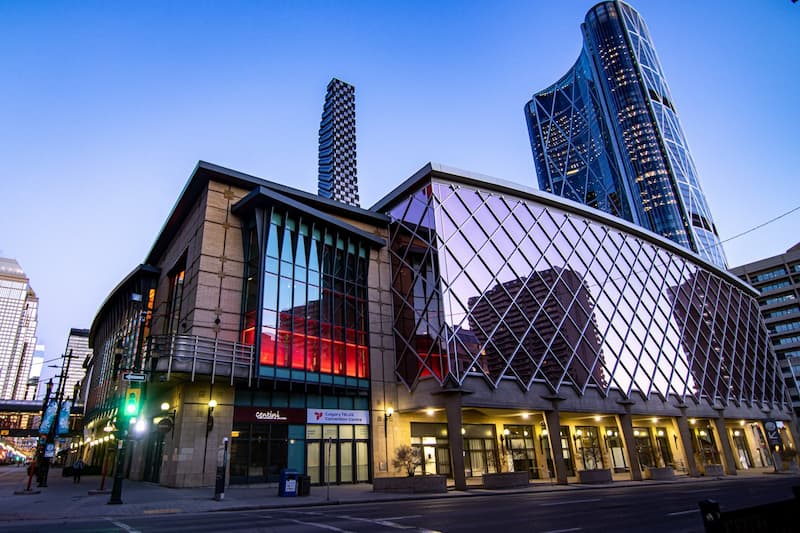
“Together, our major convention facilities give Calgary the ability to accommodate a broad range of programs and group sizes, while offering planners flexibility in how they build their event,” Woodward says.
A Convention City That’s Easy to Navigate
Calgary’s downtown is relatively compact and walkable, with major hotels, restaurants, attractions and meeting venues concentrated within a manageable area. Public transportation adds another option for moving delegates around the city.
That can help reduce some of the transportation and logistical complexity that comes with larger destinations.
Downtown hotel options include the 525-room Westin Calgary, 407-room Fairmont Palliser, 388-room Calgary Marriott Downtown, 355-room Hyatt Regency Calgary and 185-room Hotel Arts. Individual downtown properties can accommodate meetings of up to approximately 900 delegates.
The BMO Centre adds another advantage: its location within Stampede Park and the Culture + Entertainment District, while the Calgary TELUS Convention Centre sits in the downtown core.

“The infrastructure gives us the scale to compete, while the city gives us the personality to differentiate,” Woodward says.
The City Becomes Part of the Program
Calgary is in the midst of more than $2 billion in urban renewal, reshaping its downtown and Culture + Entertainment District and creating more opportunities for planners to incorporate the destination itself into an event.
That means groups don’t necessarily have to leave the city to give attendees an outdoor, cultural or culinary experience.
“The Rockies will always be an incredible part of Calgary’s story, but what we’re increasingly encouraging planners to discover is how much they can build into a program without leaving the city,” Woodward says.
His examples range from getting groups onto the Bow River and using Calgary’s extensive pathway network for an active break to chef-led cooking experiences, neighborhood dine-arounds and music programming at Studio Bell, home of the National Music Centre.
Calgary also offers more than 40 craft breweries, golf, Western-themed activities, Indigenous programming and the new Sam Centre.
For planners looking to incorporate Indigenous experiences, options can include artist demonstrations, beading, guided cultural experiences and an Elder blessing. Woodward emphasizes that planners should engage Indigenous partners early and respect cultural protocols.
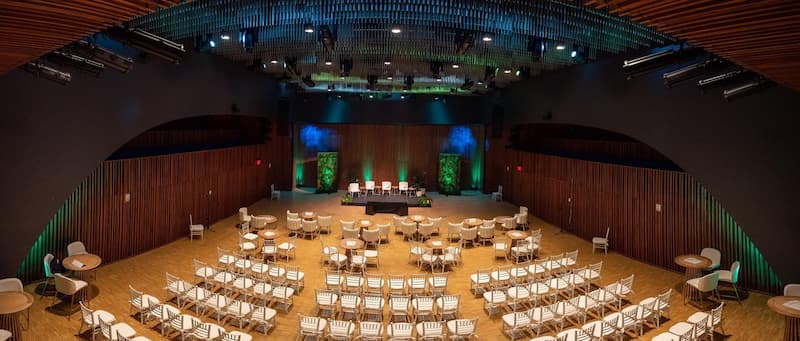
“I think that is where Calgary can surprise U.S. groups,” Woodward says. “You can have a meeting in the morning, be outside along the river that afternoon, have an incredible culinary experience that evening and still add Banff or the Rockies before or after the program. Planners don’t have to choose between a city experience and an outdoor one here.”
Getting There Is Part of the Equation
A destination can have the right venues and experiences, but planners still have to get people there.
YYC Calgary International Airport currently offers nonstop service from more than 25 U.S. cities, including New York, Newark, Chicago, Dallas-Fort Worth, Denver, Houston, Los Angeles, San Francisco, Seattle, Atlanta and Washington, D.C., with some routes operating seasonally.
For planners booking meetings years in advance, that connectivity provides another layer of confidence.
“We see opportunity both in continuing to build frequency and capacity in established U.S. markets and in strengthening connections that give more planners and delegates a convenient one-flight option into Calgary,” Woodward says.
WestJet‘s Calgary hub adds another piece to the equation, connecting the city with destinations throughout Western Canada.
“WestJet’s hub here is an enormous advantage because it allows Calgary to function not only as a destination, but as an important connecting point for Western Canada,” Woodward says.
And Calgary Isn’t Finished Yet
Perhaps the most compelling part of Calgary’s meetings story is that the transformation is still underway.
The Culture + Entertainment District around the BMO Centre continues to develop, with three planned hotels within a five-minute walk of the facility. At build-out, the district is projected to attract more than 3 million visitors annually.
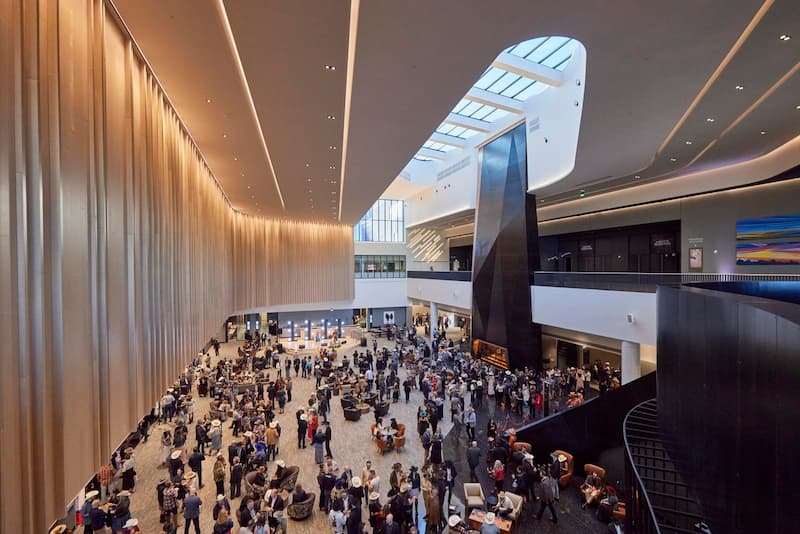
The transformation of the Werklund Centre will add a 1,000-seat theater, while the new Scotia Place arena is scheduled to open in fall 2027, adding another major entertainment and event option.
Taken together, the projects reinforce a broader shift in Calgary’s meetings identity.
The Rockies aren’t going anywhere—and they remain a powerful incentive for planners and attendees. But Calgary increasingly has the convention infrastructure, hotel inventory, connectivity and urban experiences to stand on its own as a meetings destination.
For planners, that may be the most interesting development of all: the city doesn’t require a choice between the big meeting and the memorable one.
You May Also Be Interested In…
Tampa Offers a Tempting Meeting Incentive Suite
Planner Savings: New Offers to Watch
Cyprus Offers Generous Incentive to Attract Meetings and Events